


Clinical trials play a crucial role in the development of pharmaceutical and biotech products. However, unforeseen challenges can arise during the trial process...
Continue reading
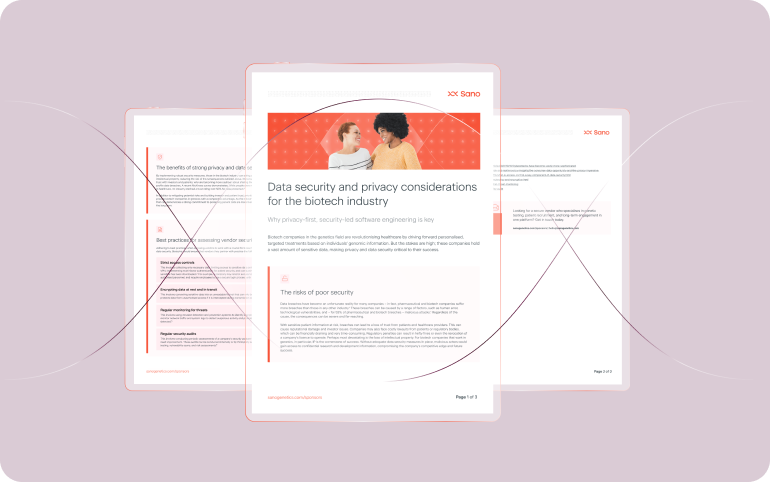
Data security is the practice of protecting digital information from unauthorized access, corruption, or theft throughout its entire lifecycle. For biotech comp...
Continue reading

Patient centricity has become increasingly important in clinical trials for ALS. In this webinar, host Paul Wicks and Cathy Collet discuss the challenges of pat...
Continue reading
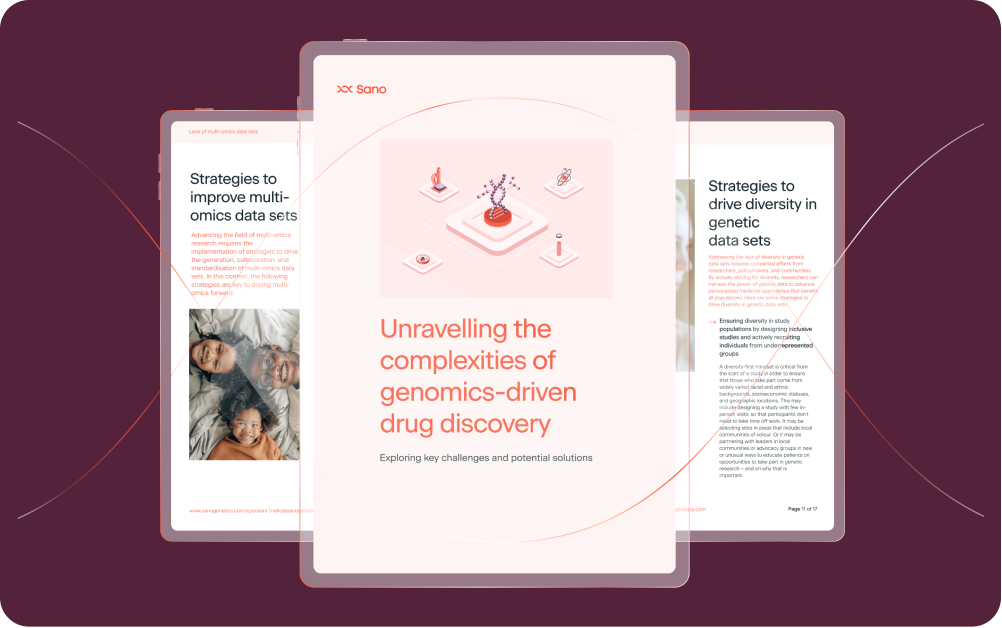
Genomics-based drug discovery offers great potential for the development of targeted therapies that can offer new and better treatment options for patients. By ...
Continue reading

Last week, our team had the privilege of attending the European Association for the Study of the Liver (EASL) conference, where groundbreaking advancements in l...
Continue reading
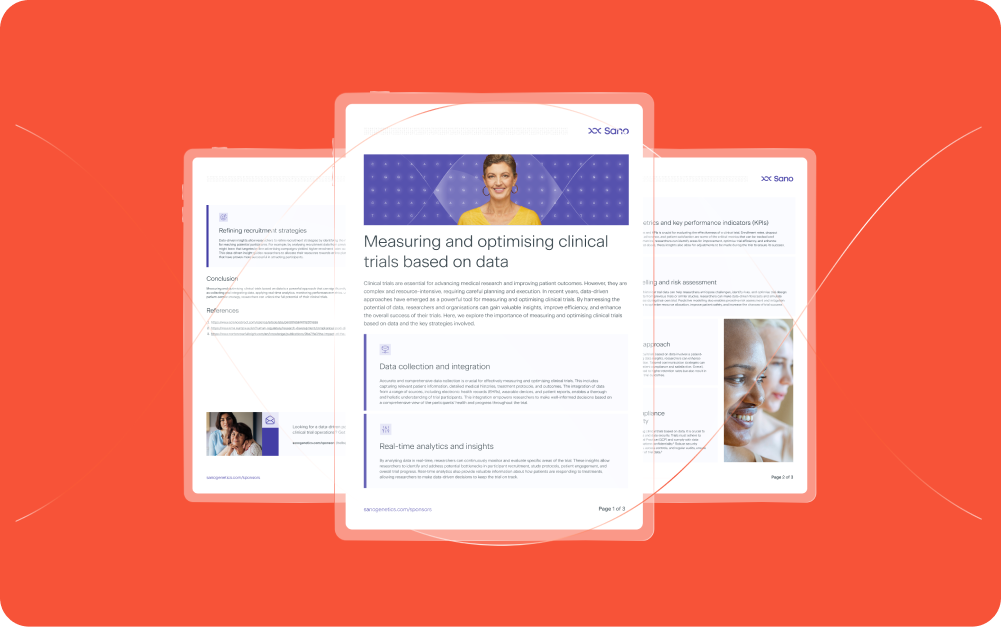
At Sano, we know that measuring and optimising data is the key to successful execution of clinical trials. That’s why we’ve put together a three-page report on ...
Continue reading
This webinar, hosted by Lindsey Wahlstrom-Edwards, Partnerships Lead for Sano Genetics, and featuring Wayne Eskridge and Dr. Neeraj Mistry from the Fatty Liver ...
Continue reading

This webinar, moderated by Patrick Short, CEO and co-founder of Sano Genetics, and featuring two panelists, Jessi Keavney and Krista Qualmann, discussed the imp...
Continue reading

Clinical trials depend on sustained patient participation, yet recruitment shortfalls and early withdrawals remain two of the most common causes of trial delays...
Continue reading

Electronic consent, or e-consent, is a method of obtaining informed consent through an electronic system rather than a paper form. It typically incorporates mul...
Continue reading