Clinical research blog
Explore our blog for insights into the big questions in precision medicine and clinical research.
The rapidly evolving landscape of precision medicine has opened new avenues for personalised treatments, transforming how we approach patient care. Genetic information is now pivotal in tailoring medical interventions to individual needs. However, with this innovation comes a complex web of ethical and regulatory considerations that must be carefully navigated to ensure patient safety, data privacy, and ethical conduct. Here are the key insights and lessons from a recent Sano webinar in which Sarah Howard, our Head of Quality and Regulatory, shed light on the ethical and regulatory landscapes surrounding precision medicine.
Genetics is no longer confined to research labs. It shapes how diseases are diagnosed, how therapies are developed, and how patients are identified for clinical trials. As genetic concepts become more central to healthcare, staying informed matters for professionals and curious listeners alike.
Precision medicine trials introduce requirements that most traditional recruitment and enrollment workflows are not designed to handle. Genetic eligibility, biomarker testing, longitudinal engagement, and multi-country coordination each add complexity, and when managed through disconnected vendors and processes, they create delays and operational risk. Sano works with sponsors and researchers to address these challenges across the trial lifecycle. Below are seven practical ways teams have worked with us to design, execute, and deliver precision medicine programs more effectively.
Genetic testing has become a central eligibility mechanism in modern clinical trials. As genetically stratified programs expand across rare disease and oncology, the regulatory frameworks governing how tests are validated, approved, and used are increasingly consequential for sponsors operating across multiple jurisdictions. As eligibility criteria increasingly depend on confirmed genetic variants, the regulatory requirements governing testing validity, laboratory compliance, and data handling have become a material operational consideration for sponsors designing and executing genetically stratified trials.
Genetics is reshaping the landscape of clinical research, and our latest whitepaper, "Guide: Genetics Essentials for Clinical Research Professionals," offers a concise yet comprehensive overview of this rapidly evolving field. This guide explores genetics' crucial role in drug development, discovery, and patient care.
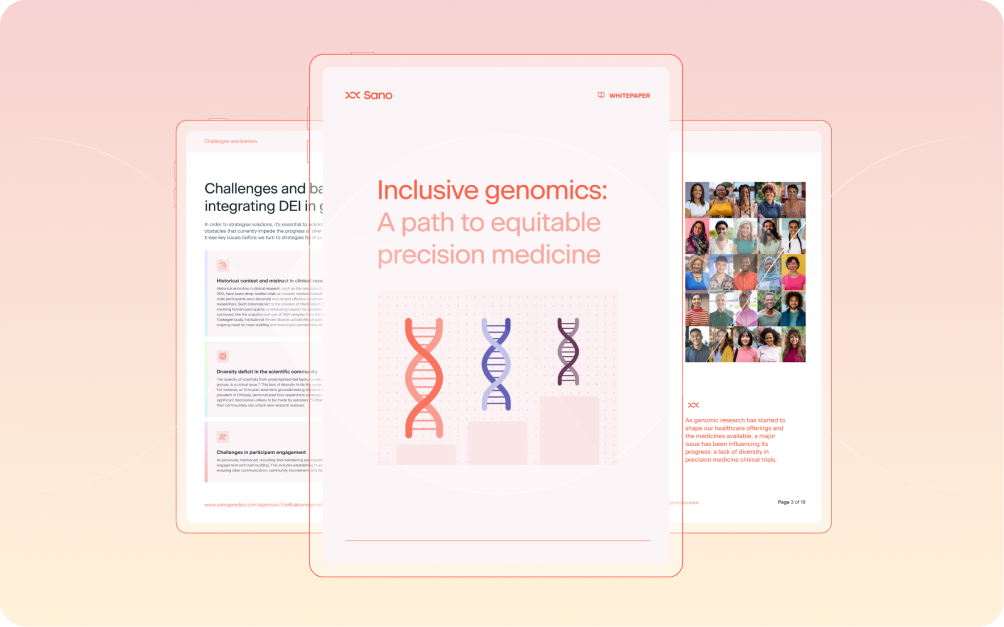
Precision medicine marks a shift from the one-size-fits-all approach to healthcare to tailored treatments and interventions that account for an individual's unique genetic makeup, lifestyle, and environment. Precision medicine improves patient outcomes and reduces the risk of trial failures by targeting treatments to individuals with the highest likelihood of response. But its validity depends on the participation of diverse and representative populations in research. Diversity ensures that medical insights are applicable across a wide range of individuals, preventing biased results that may favor specific ethnic or demographic groups.
In this webinar, Patrick Short, CEO of Sano Genetics, discussed opportunities to improve clinical trial patient recruitment in decentralised clinical trials (DCT) with Joss Warren, the Vice President of Strategic Accounts at THREAD Research. Their discussion covered how DCTs are changing the clinical research landscape, and what they mean for diversity in clinical trials as well as the future of precision medicine.
Our latest insights report explores multiple sclerosis (MS), providing details on the essential aspects of MS, from its impact on the central nervous system to the varying types of the condition. We share insights on:
In this webinar, Sano co-founder and CEO Patrick Short discusses the essentials of genetics and genomics, including genetic variation, genetic testing, and more. Patrick offers a thorough overview of current discoveries and discusses how they may impact the future of clinical practice.
Rare diseases may impact a small portion of the population, yet their significance is profound. And while rare disease patient recruitment might seem similar to recruitment for more prevalent conditions, it's a puzzle of its own. Conditions affecting a fraction of the population present complex obstacles. From the intricate challenge of participant scarcity, where the rarity of these conditions presents a unique hurdle, to the multi-faceted complexities of engagement, the world of rare disease trials demands innovative strategies that reframe the way we approach research.