

In March 2025, Sano hosted a discussion with key opinion leaders across the pharma and biotech sector to examine how sponsors and research teams are approaching these challenges in practice.
The discussion addressed how technology integration, structured patient education, and cross-organizational data sharing can be combined to improve enrollment, retention, and long-term participant relationships in precision medicine programs. It also examined the regulatory and operational conditions that need to be in place for these strategies to work at scale.
Key Takeaways
- Patient-centric engagement and education are critical for accelerating the adoption of precision medicine.
- Standardized data-sharing frameworks and interoperability are essential for characterizing rare patient populations.
- International collaboration and policy models are necessary to address high implementation costs and regulatory hurdles.
- Integrating patient voices early in the study design process significantly improves trial enrollment and retention rates.
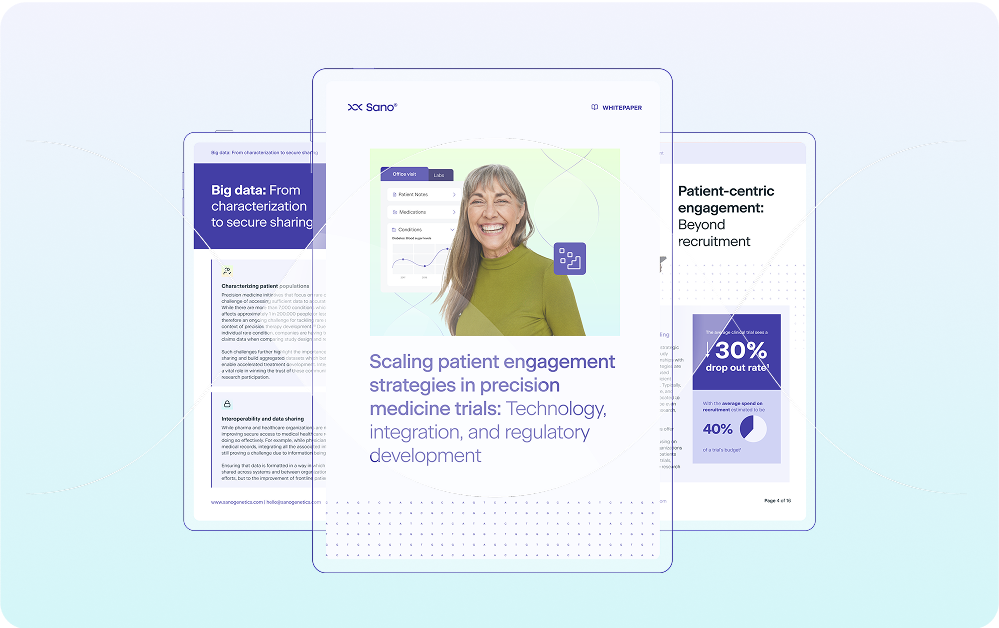
In our latest whitepaper, “Scaling patient engagement strategies in precision medicine trials: Technology, integration, and regulatory development,” we outline the key themes from the discussion, including:
- Patient-centric engagement: How relationship-building strategies, patient education, and the inclusion of patient voices in study design can improve enrollment and long-term retention
- Interoperability and investment barriers: The investment hurdles, interoperability gaps, and standardization challenges that slow the adoption of engagement strategies in precision medicine
- Data sharing and rare population characterization: Approaches to characterizing rare patient populations, structuring data sharing frameworks, and enabling cross-organizational collaboration
- Cost challenges: The economics of implementing wearables, remote monitoring, and long-term engagement infrastructure within precision programs
- An international approach: How cross-border collaboration, policy alignment, and international investment models can expand the reach and consistency of patient engagement strategies
Download the whitepaper for a detailed look at how sponsors and research teams are integrating patient education, technology, and cross-organizational collaboration into their engagement strategies. It offers practical perspectives on how to build engagement into study design from the start and maintain it across the full participant journey.