
Rare disease drug development requires designing for access from day one
 By Kim Hulse
Rare disease innovation has accelerated in recent years, particularly in cell and gene therapy (CGT). Yet for drug developers, one challenge remains persistent: translating scientific progress into therapies that patients can realistically access and benefit from.
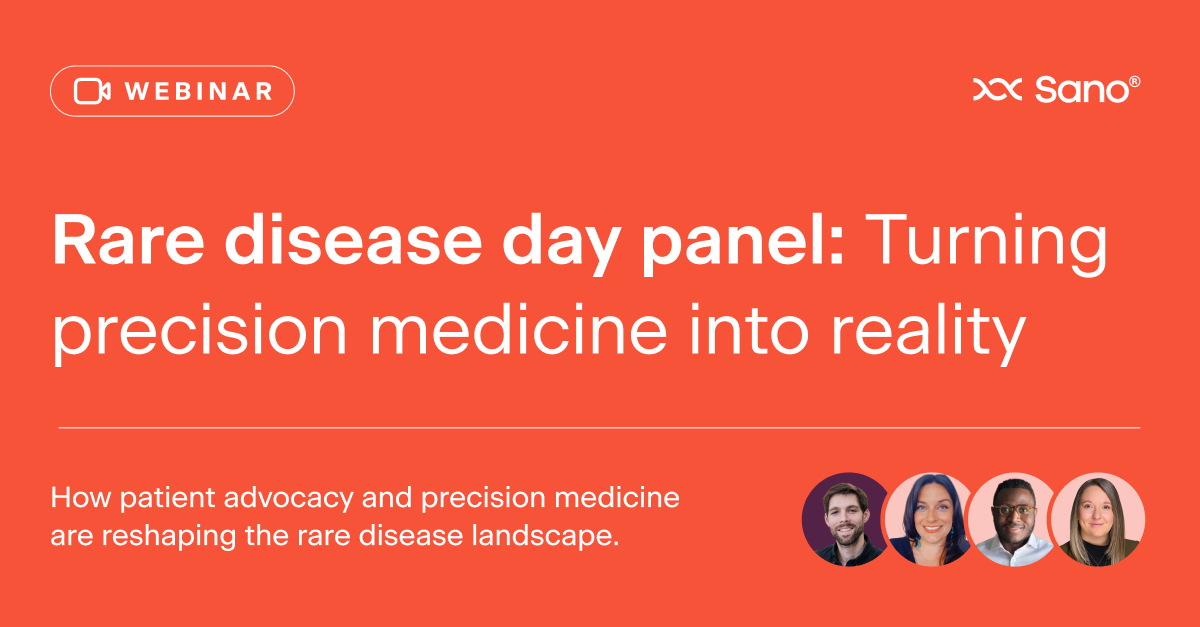
On Rare Disease Day 2026, Sano Genetics hosted a panel discussion moderated by Patrick Short, CEO and Co-Founder of Sano Genetics. The panel brought together leaders across biotech, clinical development, and patient advocacy to examine what is required to move rare disease therapies from promising data to sustainable real-world impact.
Participants included:
- Lindsey Wahlstrom, Co-Founder and Chief Momatologist of Rona’s FUN LAB
- Jimi Olaghere, sickle cell disease advocate and early CRISPR gene therapy trial participant
- Rachel Smith, Vice President and Head of Rare and Genetic Diseases at Parexel
The discussion surfaced five key themes with direct implications for rare disease drug developers.
1. Patient engagement is a clinical development strategy, not a communications strategy
In rare disease clinical trials, recruitment challenges are often framed as operational hurdles. The panel emphasized that they are largely design issues.
“Recruitment challenges are locked in at the moment of protocol lock. It’s not a marketing thing, it’s a design thing.”
- Lindsey Wahlstrom, Co-Founder and Chief Momatologist of Rona’s FUN LAB
For pharma and biotech teams, this has measurable implications:
- Recruitment delays increase development timelines and capital exposure
- Protocol amendments increase cost and regulatory complexity
- Misaligned endpoints reduce clinical relevance and payer resonance
Early patient engagement strengthens endpoint selection, feasibility modeling, and real-world relevance. It also reduces downstream execution risk. Accordingly, in rare disease drug development, patient engagement can be considered a risk mitigation strategy rather than an add-on.
2. Access is a development variable
Rare disease therapies frequently face post-approval access barriers related to infrastructure, cost, and delivery logistics. The panel argued that access planning must begin during development rather than after regulatory approval.
“We need to stop putting patients at the tail end of the chain and put them actually in front."
- Jimi Olaghere, sickle cell disease advocate
He continued:
“We need to learn how to research and develop accessibility while we're researching and developing the science.”
For advanced therapies such as CGT, infrastructure constraints are particularly significant:
- Specialized transplant centers limit geographic access
- Intensive monitoring requirements increase health system burden
- Reimbursement uncertainty affects payer adoption
When access considerations are incorporated into development planning, sponsors can:
- Anticipate infrastructure bottlenecks
- Generate data relevant to payer decision-making
- Reduce commercial launch risk
In rare and precision medicine programs with small target populations, access should not be treated as a downstream commercialization question.
3. Rare disease changes the ethical and operational context of clinical trials
Rare disease trials operate under unique conditions. Small patient populations, limited treatment alternatives, and high unmet need shape participation dynamics.
“The existence of a study becomes inherently coercive. Any barrier to entry becomes too high because of the stress that families are already under.”
- Lindsey Wahlstrom
Study burden must be evaluated within this context. For drug developers, this has practical implications:
- Excessive visit schedules reduce feasibility
- Geographic constraints limit diversity and enrollment
- Inflexible trial models increase caregiver burden
Decentralized clinical trial elements, remote data capture, mobile phlebotomy, and real-world evidence strategies can reduce friction while preserving scientific rigor.
Additionally, informed consent should not be viewed as a one-time event. Ongoing communication throughout the study lifecycle improves retention and trust.
Trial design choices directly affect enrollment speed, data completeness, and regulatory confidence.
4. Regulatory strategy and sponsor accountability are interlinked
Rare disease regulatory pathways have evolved, including accelerated approval mechanisms and orphan drug incentives. However, regulatory agencies must balance urgency with safety.
Rachel emphasized the importance of questioning whether traditional trial models are always appropriate in rare contexts. Adaptive trial designs, external control arms, and platform approaches may better align with small populations and high unmet need.
For sponsors, proactive engagement with regulators is essential. Presenting innovative study designs backed by strong rationale can shift regulatory conversations.
At the same time, authentic patient engagement must be sponsor-led. Regulatory requirements may mandate patient involvement, but meaningful collaboration requires initiative.
Sponsors who integrate patient insights early can:
- Strengthen regulatory submissions
- Improve benefit-risk narratives
- Enhance payer alignment
In rare disease, regulatory success is closely tied to development strategy.
5. Redefining success in rare disease development
Approval is an important milestone, but it is not the sole measure of impact.
Panelists discussed the need to expand beyond binary efficacy outcomes and consider quality of life, functional improvement, and long-term support. For rare disease drug developers, this translates into broader endpoint thinking and lifecycle planning.
Strategic considerations include:
- Incorporating patient-reported outcomes into development programs
- Planning long-term follow-up that informs real-world evidence
- Aligning clinical endpoints with payer value frameworks
Expanding the proportion of rare diseases with approved treatments remains critical. Lindsey emphasized that one of the goals should be to have approved treatments for more than 5% of rare conditions. Scalable models and platform approaches may be necessary to accelerate progress across multiple indications.
What this means for rare and precision medicine developers
For pharma and biotech teams working in rare disease and precision medicine, the implications are clear:
- Engage patients before protocol lock to reduce recruitment and amendment risk
- Design for access during development to mitigate post-approval bottlenecks
- Incorporate decentralized and flexible models to reduce trial burden
- Align regulatory strategy with innovative but defensible trial design
- Integrate quality-of-life metrics into evidence generation
Rare disease drug development requires coordination across clinical strategy, operations, regulatory planning, and commercial foresight.
Scientific innovation is foundational. Sustainable impact requires development models that anticipate real-world delivery.
To hear directly from leaders across rare disease clinical development, patient advocacy, and advanced therapy innovation, watch the full on-demand webinar.