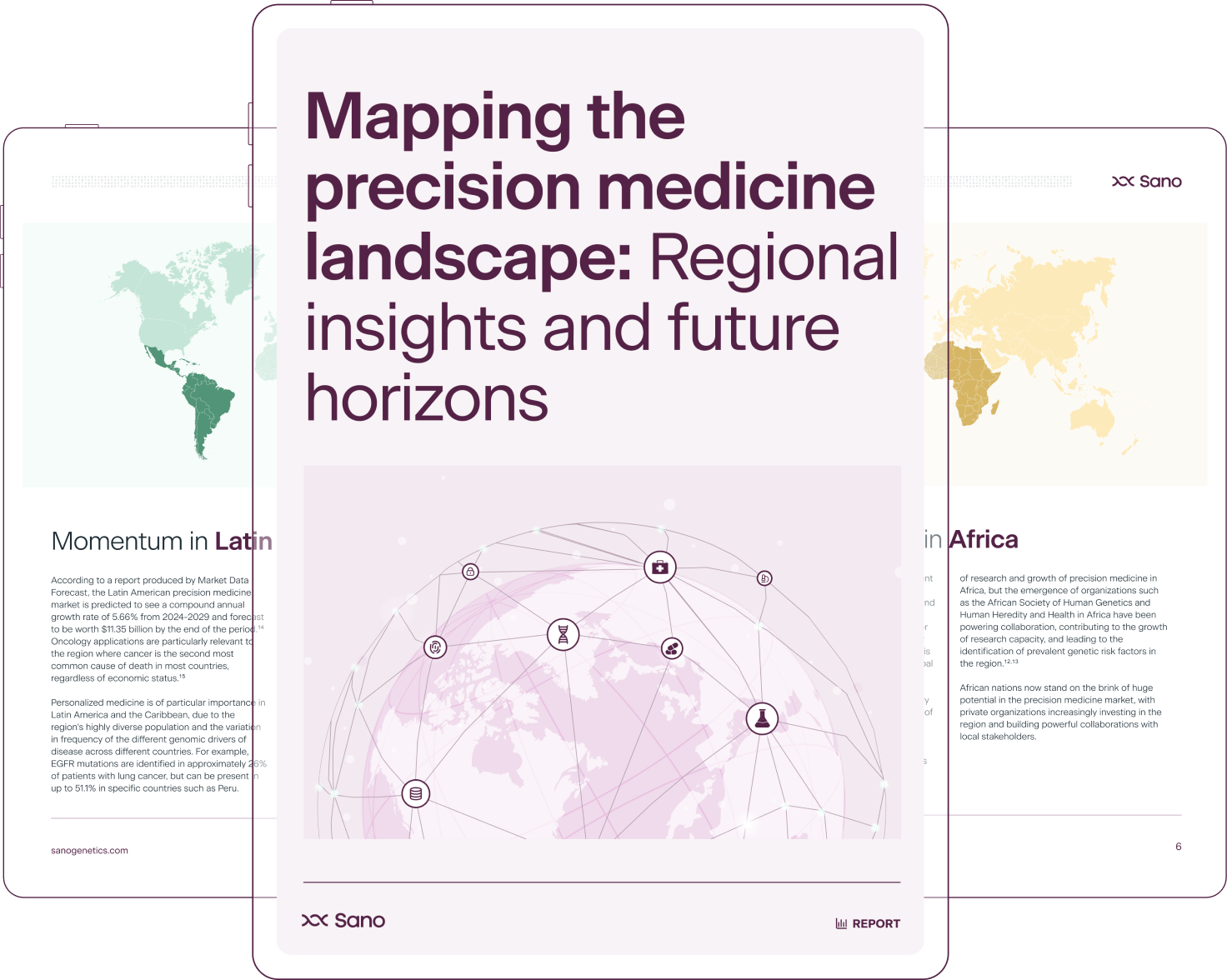

Key Takeaways
- Precision medicine is shifting healthcare from reactive treatment to proactive prevention.
- The cost of genetic testing has decreased 4.5 million times since 2003, making personalized care more accessible.
- North America currently leads the global market, while Asia Pacific is the fastest-growing region.
- Europe excels in cancer treatment, while Africa and Latin America represent significant untapped genetic research potential.
Why now?
Several converging factors are accelerating the adoption of precision medicine globally. Rising rates of chronic disease, aging populations, and persistent inequality in healthcare access are exposing the limits of traditional treatment models built around average patient responses. Precision medicine offers a more targeted alternative, one that enables earlier intervention based on individual risk profiles rather than population-level assumptions.
A key enabler is the dramatic reduction in the cost of genetic testing, now approximately 4.5 million times cheaper than when the first human genome was sequenced in 2003. This shift has made it feasible to integrate genetic and biomarker data into clinical workflows at scale. As a result, areas such as precision oncology, pharmacogenomics, and rare disease research are expanding rapidly, each requiring new approaches to patient identification, testing, and trial design.
The trajectory of this shift differs meaningfully across regions, shaped by regulatory frameworks, government investment, healthcare infrastructure, and the availability of diverse genetic data.
Precision medicine adoption across regions
The report covers the below five regions.
• North America: Maintains a leading position in market size and infrastructure, with deep investment in genomic research and an expanding regulatory framework for biomarker-driven therapies.
• Asia Pacific: Experiencing rapid growth driven by large-scale government genomics initiatives and increasing integration of genetic data into healthcare systems.
• Europe: Advancing precision oncology and cross-border research collaboration, while navigating complex privacy and data-sharing regulations.
• Africa: Holds significant potential due to the continent's unmatched genetic diversity, though infrastructure and funding gaps remain substantial barriers.
• Latin America: Growing investment and expanding clinical trial activity are creating new entry points for precision medicine programs, particularly in oncology and rare diseases.
Impact
For sponsors and clinical teams designing genetically stratified trials, these regional differences have direct operational implications. Patient identification strategies, genetic testing logistics, regulatory requirements, and engagement models all vary by geography. Understanding where precision medicine infrastructure is mature and where it is still developing is a prerequisite for realistic feasibility planning and enrollment forecasting.
Download the full report for a detailed breakdown of regional dynamics, including market drivers, regulatory considerations, and the infrastructure shaping precision medicine adoption in each geography.