
Podcast recap: Zornitza Stark on real-world impact from newborn genomic screening
 By Joy N. Ismail, PhD
As genetic medicine has continued to advance, experts have consistently highlighted the importance of newborn genomic screening as a practical avenue for early detection of rare genetic diseases. Intervention within the first few weeks of life can prevent irreversible harm associated with undiagnosed conditions. Beyond its clinical impact, newborn screening is becoming a key test case for integrating genomics into public health infrastructure, rather than limiting it to research or specialty care.
Despite decades of discussion, only in the past few years have large-scale pilot programs begun to generate real-world evidence on what genomic newborn screening delivers in clinical practice. Early results now provide concrete data on feasibility, diagnostic yield, downstream clinical action, and health system impact.
In the last episode of The Genetics Podcast, Dr. Zornitza Stark, clinical geneticist and co-lead of Translational Genomics at the Murdoch Children’s Research Institute, discusses findings from the BabyScreen+ study in Victoria, Australia. The program offers one of the clearest views to date of how genomic screening can be integrated into existing newborn screening workflows and what that integration means for patients, families, and health systems.
What is newborn genomic screening?
Genomic newborn screening uses genome sequencing (or targeted sequencing) to screen apparently healthy newborns for genetic conditions where early detection changes care. Most current pilots focus on conditions that are severe, childhood-onset, and medically actionable, with strong gene–disease validity and a clear confirmatory testing pathway.
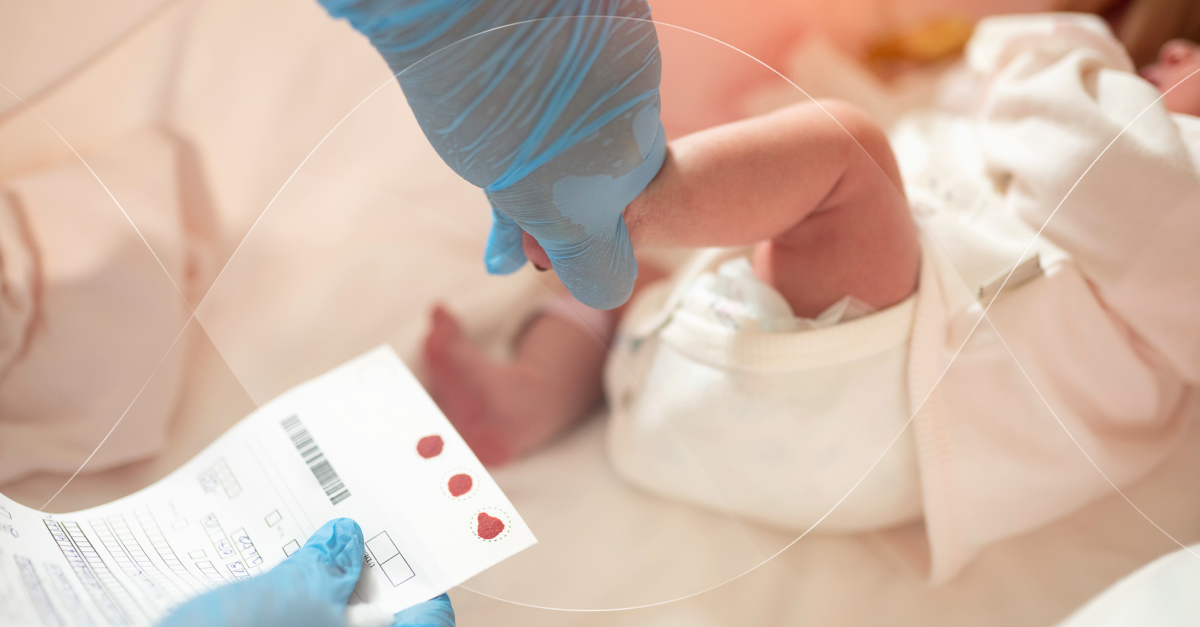
Several leading programs have demonstrated that sequencing can be performed using residual dried blood spots from routine newborn screening cards, which reduces friction for families and avoids building an entirely new sample collection system.
BabyScreen+ in Victoria
BabyScreen+ screened 1,000 newborns in Victoria, Australia using whole-genome sequencing performed from dried blood spot cards, analyzing variants in 605 genes associated with early-onset, severe, treatable childhood conditions.
Overall, 16 newborns (1.6%) had a screen-positive result, and all were confirmed on secondary testing. Only 1 of the 16 would have been detected by standard biochemical newborn screening, highlighting a diagnostic gap for actionable conditions without a reliable biochemical marker on dried blood spots. The study reports real downstream clinical consequences ranging from low-burden prevention guidance to high-acuity, time-sensitive intervention.
Dr. Stark described one of the most concrete value cases: a baby identified with a severe immunodeficiency who became unwell within weeks, with the program enabling proactive monitoring, rapid treatment, and a curative bone marrow transplant within months.
What other real-world programs show about feasibility and yield
BabyScreen+ is part of a broader global pattern: pilots running concurrently across different health systems, using different gene lists, consent models, and return-of-results strategies.
GUARDIAN (New York)
GUARDIAN reported interim results for 4,000 newborns enrolled across six New York City hospitals. Feasibility signals were strong: 72.0% of approached families consented, and sequencing was completed for 99.6% of participants. The screen-positive rate was 3.7% using their predefined panel approach.
GUARDIAN also provides a clean data point on parental demand for broader screening. In the published interim analysis, 90.6% of families consented to screening of both groups of conditions, where the second group was an optional set of neurodevelopmental disorders associated with seizures.
Early Check (North Carolina)
Early Check published initial genomic newborn screening results using residual dried blood spots and a framework that included 169 high-actionability genes plus 29 optional lower-actionability genes. In eight months, Early Check screened 1,979 newborns, with 50 (2.5%) screen positives. Of these, 28 (55%) were true positives, and confirmed families received anticipatory guidance, surveillance, and management recommendations, with referrals to specialists as needed.
Baby Detect
In contrast, Baby Detect uses targeted sequencing panels, rather than whole genome sequencing, to identify treatable severe early-onset genetic diseases, with a panel of 361 genes associated with 126 diseases. This illustrates an alternate adoption path for health systems that want narrower scope, lower cost, and simpler analytics at the expense of future reanalysis flexibility.
Rapid genomics in critically ill infants
Dr. Stark has also implemented a national project in acute care genomics, revealing the impact of genomic sequencing with aggressive turnaround times. In a multicenter Australian study of ultra-rapid exome sequencing in critically ill infants and children across 12 hospitals, the mean time to report was 3.3 days, and the molecular diagnostic yield was 51%. When a diagnosis was made, results influenced clinical management in 76% of diagnosed patients, including targeted treatments, palliative redirection, and surveillance initiation.
Newborn screening is a different use case, but the operational lesson transfers: genomic medicine creates value when turnaround time, interpretation quality, and downstream pathways are engineered as a system, not treated as a lab add-on.
Scaling newborn genomic screening
BabyScreen+ directly tested scalability constraints. The study demonstrated the feasibility of using dried blood spot cards and highlighted the operational challenge of variant analysis review burden and the need for greater automation to scale from a 1,000-baby cohort to a population program.
This is where national genomics infrastructure becomes a gating factor. Maintaining clinically valid gene lists, sharing curated variant interpretations, and keeping evidence current requires platforms and governance that outlive research grants.
What to watch next
As pilot programs mature, the next phase of newborn genomic screening will be defined by measurable outcomes. Several signals will determine whether these programs can transition from research initiatives into routine components of public health screening:
- Longitudinal outcome data (morbidity avoided, time-to-treatment gains, and downstream healthcare utilization), which BabyScreen+ and other pilots note is still emerging.
- Harmonized reporting metrics that allow apples-to-apples comparisons of screen-positive rates, true positive rates, and follow-up burden.
- End-to-end cost-effectiveness that accounts for avoided diagnostic odysseys and targeted prevention, building on the economic evidence base Australia has generated in paediatric genomics more broadly.
The field is now producing concrete, program-level evidence about yield, feasibility, consent behavior, and clinical actionability. BabyScreen+ is a clear example of what that evidence looks like when it is grounded in real families, real workflows, and real outcomes.
Listen to the full episode below.