
Podcast recap: Yentli Soto Albrecht on turning a fatal diagnosis into a cure strategy
 By Joy N. Ismail, PhD
The C9orf72 hexanucleotide repeat expansion is the most common genetic cause of both ALS and frontotemporal dementia (FTD). Carriers face roughly a 50% chance of developing disease by their 50s, rising to approximately 95% by age 65. Yet despite its significance, the research infrastructure around this mutation remains fragmented, and no clinical trials exist for C9-related FTD.
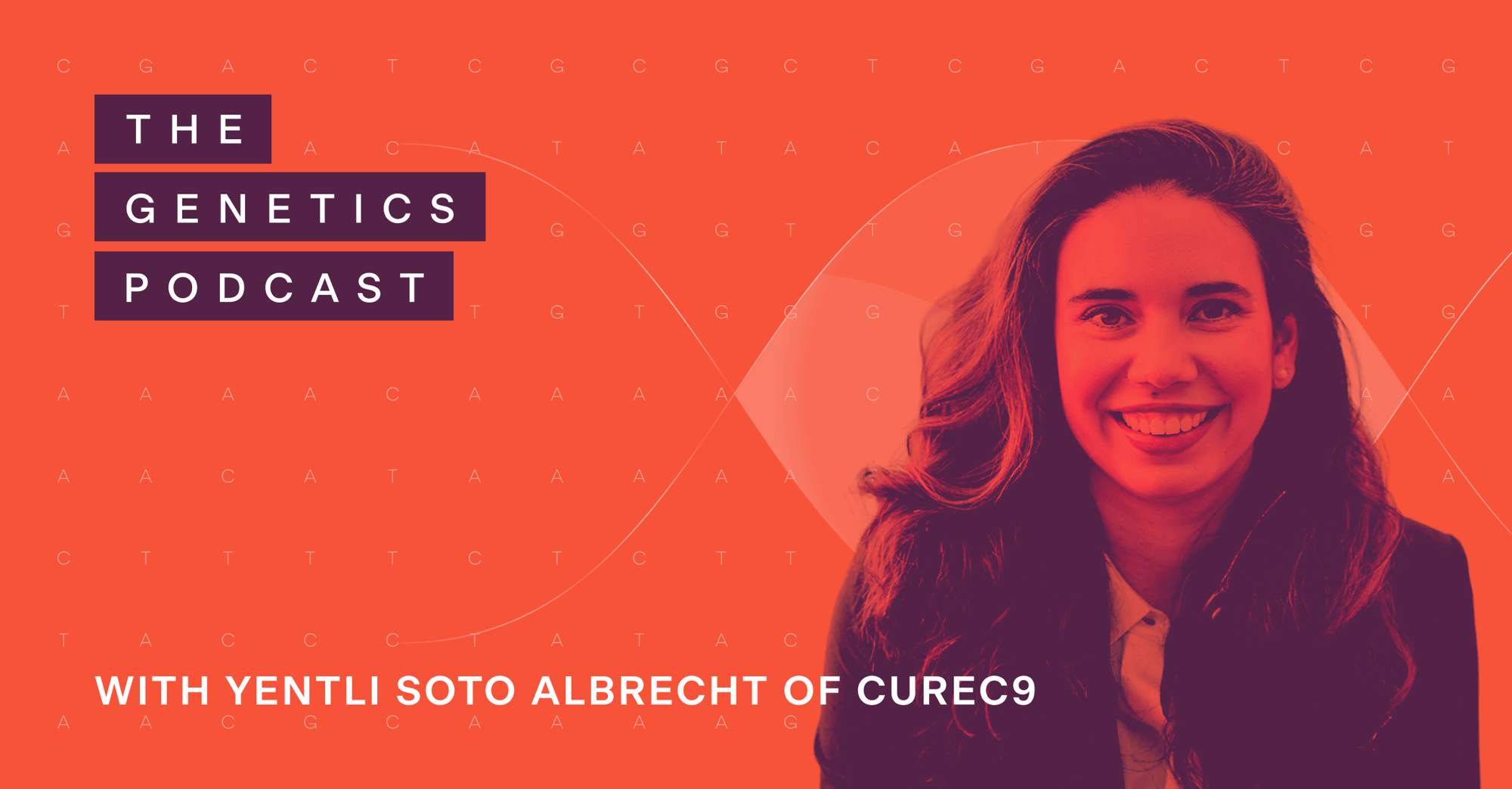
In the most recent episode of The Genetics Podcast, host Patrick Short speaks with Yentli Soto Albrecht, an MD-PhD trainee at the University of Pennsylvania who carries the C9orf72 expansion herself. After losing her father to C9 ALS in August 2024, Yentli co-founded CureC9, a nonprofit working to remove the structural barriers that slow research toward treatments and cures.
This conversation cuts to the core of a problem that extends well beyond a single gene: how do we build the systems, samples, and funding pathways that let therapeutic research move faster?
C9orf72 biology is more complex than most ALS narratives suggest
The C9orf72 repeat expansion produces seven distinct aberrant gene products along with TDP-43 proteinopathy, a protein dysregulation pattern found in 97% of ALS cases, roughly 50% of FTD cases, and approximately 50% of Alzheimer's cases. This breadth means that progress on C9orf72 biology has implications far beyond a single rare disease.
As Yentli explained on the episode: "If we crack the code for TDP-43, it might not just help C9 patients but also help all these other forms of neurodegeneration."
The complexity of C9 biology also creates a challenge for biomarker development and trial design. Neurofilament light chain (NfL), the most widely used ALS biomarker, does not perform well as a marker for FTD progression. This gap means that researchers lack the tools to measure disease trajectory in a significant portion of C9 carriers, and it helps explain why no C9-FTD trials have been initiated.
The bottleneck is delivery
CRISPR-based tools for targeting the C9orf72 expansion already exist. The limiting factor is getting those therapies to the right cells in the central nervous system. Gene therapy delivery to the brain remains one of the hardest unsolved problems in neurology, and it is the primary technical barrier standing between current science and a viable treatment.
CureC9 has identified this delivery challenge as a strategic priority. The organization is raising $12 million specifically to fund CNS gene therapy optimization, an effort designed to benefit any research group working on C9-related neurodegeneration.
Yentli's framing captures the philosophy: "I don't care who cures ALS/FTD, I just want it to happen as efficiently and fast as possible."
Researcher access to samples and cell lines is a hidden constraint
One of the less visible barriers in rare disease research is the difficulty of accessing biological materials. Yentli described her own experience: "It took me 12 months to get access to my dad's cells and my cells in my lab." For researchers without personal connections to the patient community, this timeline can be even longer, or the access may never materialize at all.
CureC9's BrainXell biorepository is designed to address this gap directly. The repository adds approximately 12 new cell lines per year, providing researchers with patient-derived materials that would otherwise require months of negotiation, ethics approvals, and institutional coordination to obtain.
The biomarker gap leaves C9-FTD patients without trial options
Carriers of the C9orf72 expansion can develop ALS, FTD, or both. Current clinical trial infrastructure, however, overwhelmingly focuses on ALS. As Yentli put it: "I kinda have to hope it's ALS because otherwise I'm not eligible for a trial."
This statement reflects a structural reality. Without validated biomarkers for FTD progression, sponsors lack the endpoints needed to design and run C9-FTD trials.
A patient-researcher building the system from inside
Yentli's trajectory is unusual. She pivoted from virology to ALS research after receiving her own genetic results, and she describes the work not as a burden but as a source of purpose. "Going down this path didn't cause me pain," she said. "It gave me energy on a daily basis."
Her dual perspective as both a C9 carrier and a trained researcher shapes CureC9's strategy. As Yentli noted: "Sometimes the most effective hat you can wear is the most unexpected."
Listen to the full episode below.