
Podcast recap: Sarah Marzi on how genetics, environment, and cell state shape neurodegenerative disease
 By Joy N. Ismail, PhD
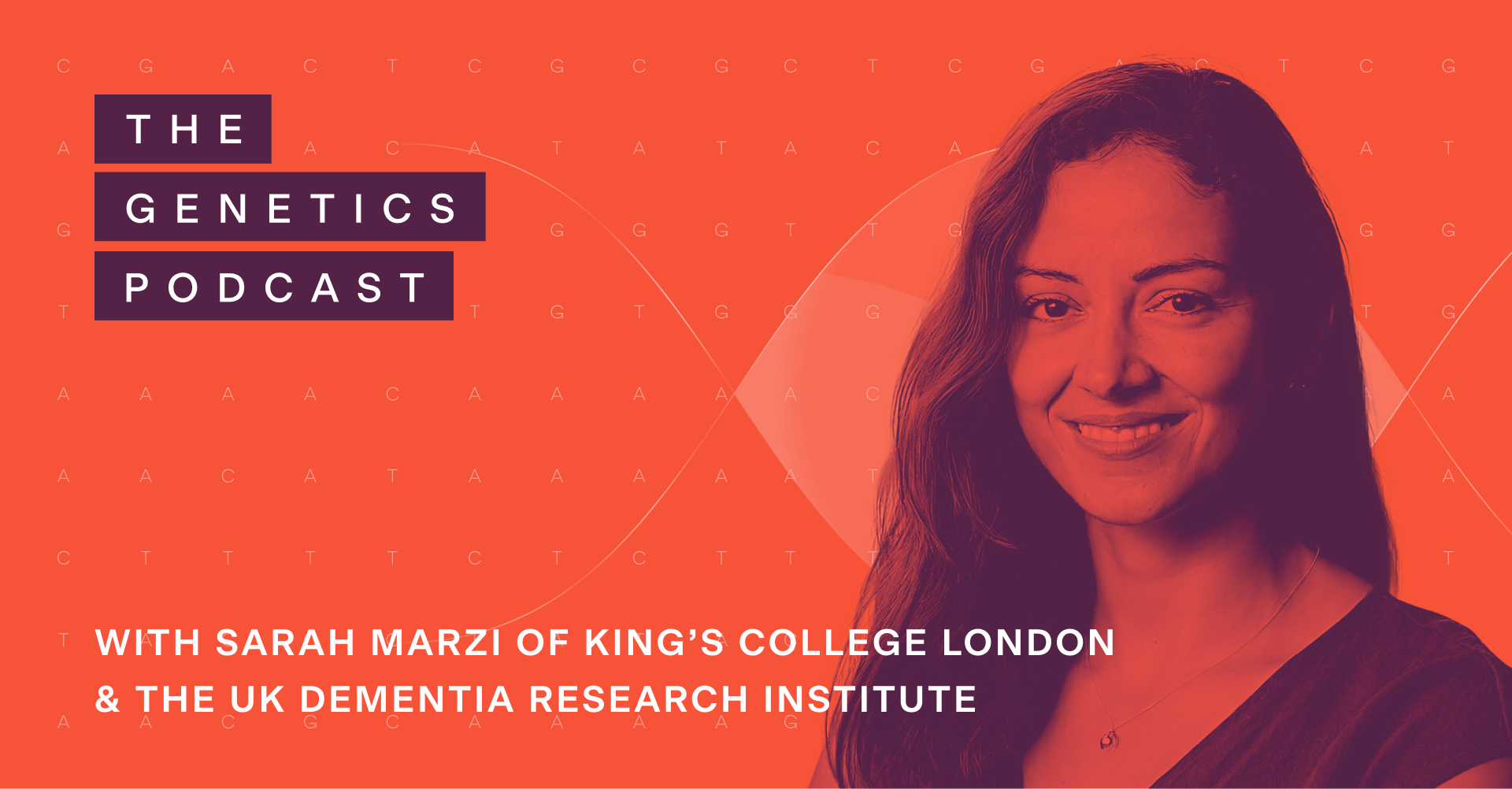
In the most recent episode of The Genetics Podcast, Patrick Short speaks with Dr. Sarah Marzi, Senior Lecturer at King’s College London and Group Leader at the UK Dementia Research Institute (UKDRI), about ahow genetic and environmental risk factors influence neurodegenerative disease.
The conversation spans Alzheimer’s disease, Parkinson’s disease, ALS, microglia, and why understanding cell states may be critical for future therapeutic strategies. The discussion highlights why neurodegenerative disease may need to be understood not only through inherited risk, but through the changing biology of cells over time.
Why neurodegeneration is more than a genetics problem
A recurring theme in the conversation is that neurodegenerative diseases sit at the intersection of inherited risk, environmental exposure, aging, and cellular context.
Sarah notes that Parkinson’s disease is comparatively less heritable than some other neurodegenerative conditions, with environmental factors likely playing a larger role. Pesticides, heavy metals, industrial solvents, and other exposures have all been implicated, although the strength of evidence varies by exposure and disease.
This raises a central challenge for the field: genetic and environmental risks may not act independently. They may converge on shared biological pathways, alter cell states, or change how vulnerable specific neurons and glial cells become over time.
Microglia, APOE, and Alzheimer’s risk
Much of Sarah’s Alzheimer’s work focuses on microglia, the resident immune cells of the brain. These cells clear debris, respond to injury, and help regulate the brain’s immune environment.
Genetic studies have shown that Alzheimer’s risk variants are enriched in regulatory regions that are active in microglia. This suggests that inherited risk may shape disease by changing how microglia behave.
One major focus is APOE, the strongest genetic risk factor for late-onset Alzheimer’s disease. Sarah’s team studied human microglia engineered to carry different APOE variants, then placed them into mouse models of amyloid pathology. They found that APOE4 microglia showed several potentially harmful features, including poorer movement, increased inflammatory signaling, and reduced phagocytosis.
This indicates that APOE4 may increase Alzheimer’s risk by altering specific microglial functions that are important for responding to early pathology.
Vitamin D signaling as a possible mechanistic link
One of the most interesting findings from Sarah’s work was a signal involving the vitamin D receptor, a transcription factor activated by vitamin D.
Her team found evidence that vitamin D receptor binding was enhanced in APOE2 microglia, the protective APOE variant. This is intriguing because vitamin D deficiency has been associated with increased Alzheimer’s risk and faster disease progression.
The mechanistic chain is still being worked out. Sarah emphasized that vitamin D signaling involves multiple steps, including receptor activation, nuclear localization, and interaction with other transcriptional machinery. The key question now is whether manipulating this pathway could make harmful APOE4 microglia behave more like protective APOE2 microglia.
Why postmortem brain studies matter
Model systems are powerful, but neurodegenerative disease unfolds in human brains over decades. To bridge that gap, Sarah and collaborators are building one of the largest cell-type-specific epigenomic studies of Alzheimer’s brain tissue.
The project uses postmortem samples from Alzheimer’s cases and controls, separating different brain cell populations before profiling epigenetic regulation. This allows researchers to ask what is happening in microglia, neurons, oligodendrocytes, and other cells separately, rather than averaging signals across mixed brain tissue.
This is important because Alzheimer’s affects cell types in different ways. Microglia may help initiate or amplify risk, neurons ultimately die, oligodendrocytes lose myelination capacity, and the blood-brain barrier can become more permeable. Understanding which changes are causal, compensatory, or late-stage consequences remains one of the major challenges.
Parkinson’s disease and environmental exposure
The episode also explores Parkinson’s disease, where environmental risk may be especially important.
Sarah discusses work on rotenone, a pesticide that inhibits mitochondrial complex I. Although mitochondrial function is essential in all cells, rotenone exposure selectively affects dopaminergic neurons in the substantia nigra, the neuronal population most affected in Parkinson’s disease.
Her team’s work suggests that the response is not only neuronal. In the substantia nigra, rotenone exposure triggers strong immune activation, including upregulation of the complement system in microglia. This may help explain how environmental toxicants contribute to selective neuronal vulnerability.
Implications for therapeutic development
For drug development, the conversation highlights a familiar problem in neurodegeneration: disease biology is long, multi-cellular, and dynamic.
Anti-amyloid therapies can clear amyloid plaques and slow decline in some patients, but they do not stop Alzheimer’s disease. Sarah suggests that future treatment may require combinations of approaches that target upstream disease drivers while also preserving synaptic function, neuronal survival, and broader brain resilience.
Functional genomics may help identify these targets by collapsing diffuse genetic risk into more tractable pathways, transcription factors, or cell states. That could be especially valuable in Alzheimer’s, where much of the inherited risk beyond APOE is polygenic and difficult to target gene by gene.
Conclusion
This episode shows why neurodegenerative disease research is moving beyond single genes and single pathologies.
The future of Alzheimer’s and Parkinson’s research may depend on understanding how genetics, environmental exposure, immune activation, metabolism, and cell state interact over time. For precision medicine and therapeutic development, that means better models, richer human tissue data, and a clearer view of which biological changes are truly driving disease.
Listen to the full episode below.