
Podcast recap: Paul Valdmanis on long-read sequencing and the genetics of neurodegeneration
 By Joy N. Ismail, PhD
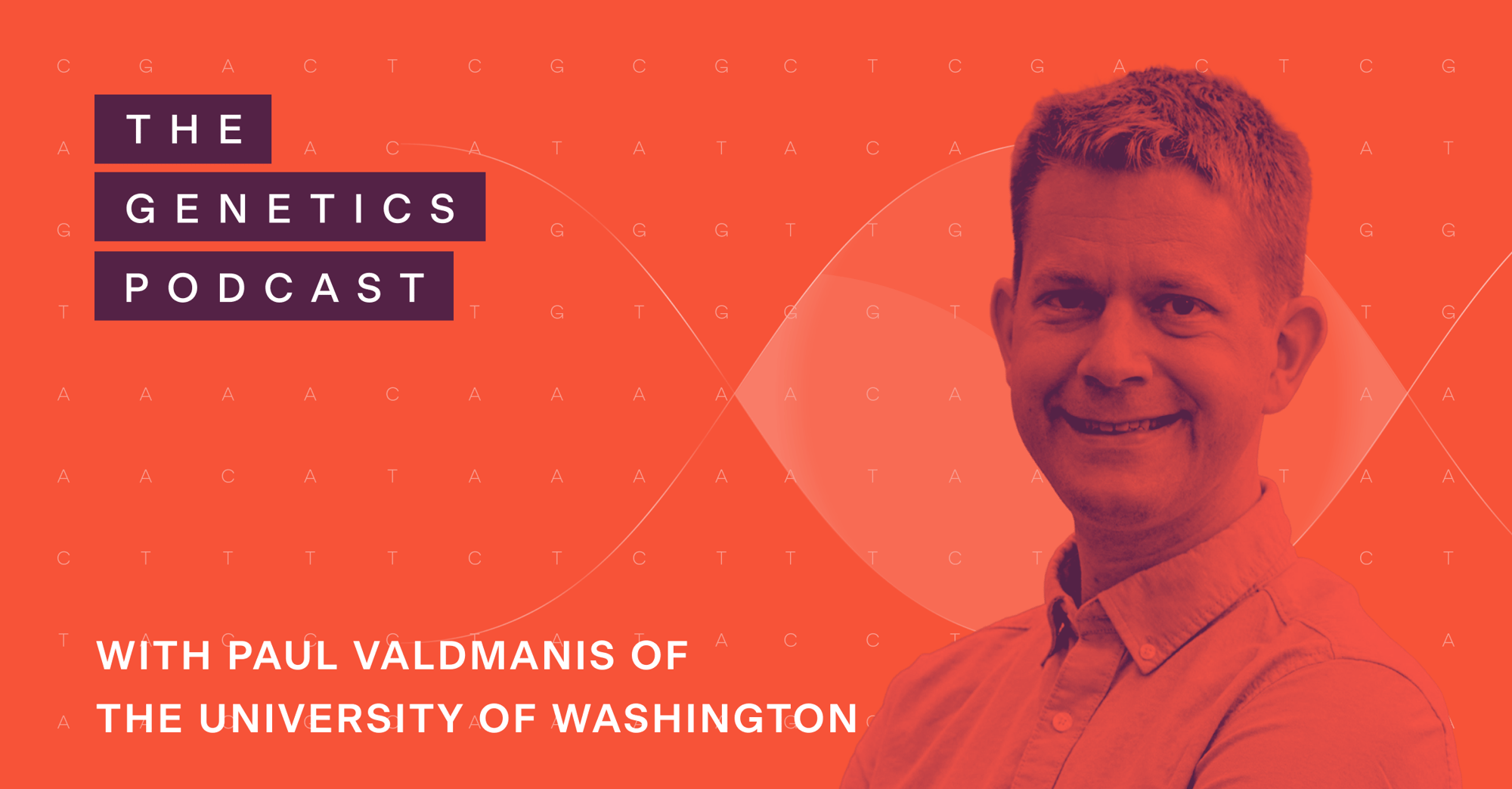
In the most recent episode of The Genetics Podcast, host Patrick Short speaks with Dr. Paul Valdmanis, Associate Professor at the University of Washington, about how long-read sequencing is changing what researchers can see in the genome, and what that could mean for Alzheimer’s disease, ALS, and future neurodegenerative disease therapies.
Rethinking APOE4 risk
APOE4 is one of the strongest known genetic risk factors for Alzheimer’s disease, but the risk is not uniform. People of African ancestry who carry APOE4 have historically shown lower Alzheimer’s risk than APOE4 carriers of European or East Asian ancestry.
Paul explains that this discrepancy has been a puzzle for the field. The APOE locus has been studied for decades, yet much of the work has relied on tools that make it difficult to resolve the full structure of each haplotype. His lab wanted to ask whether variants traveling on the same allele as APOE4 might be modifying disease risk.
Using long-read sequencing, the team identified a deletion located very close to APOE that appears to disrupt an enhancer site involving SPI1, a microglial transcription factor already implicated in Alzheimer’s disease biology. That connection was compelling because microglia, the brain’s resident immune cells, are increasingly recognized as key players in Alzheimer’s disease. Functionally, the deletion seems to alter APOE regulation in microglial cell models.
These findings suggest that APOE4 risk is not defined by APOE4 alone. The surrounding haplotype can shape how much risk the allele confers. Second, it shows why population diversity in genomics is essential. A variant that is informative in one ancestry group may be rare or absent in another, meaning it can be missed entirely if research cohorts are too narrow.
What long-read sequencing can reveal
A central theme of the episode is that long-read sequencing gives researchers a more complete view of genetic variation. With short reads, scientists often infer which variants sit together on the same haplotype. Long reads make it possible to observe that structure more directly.
That difference is especially important in complex regions such as APOE, where nearby regulatory elements, neighboring genes, and inherited haplotypes may all influence disease risk. Paul notes that the deletion’s effects may not act only through APOE itself. His team also found evidence involving AOC1, a nearby gene that may help regulate APOE expression indirectly.
The same logic applies beyond Alzheimer’s disease. Paul’s lab uses long-read sequencing to investigate tandem repeat expansions, cryptic exons, and structural variation across neurodegenerative diseases. These are precisely the kinds of variants that can be missed or mischaracterized when researchers only look where standard sequencing performs well.
Paul frames this as looking beyond the lamppost. Many unsolved genetic questions may not reflect an absence of genetic contributors, but rather limitations in how the genome has been measured.
ALS, Alzheimer’s, and shared mechanisms
Paul’s interest in ALS began during his doctoral training at McGill University, where he worked with families affected by inherited neurodegenerative disease. Those family studies helped shape his interest in finding genetic causes that conventional approaches could not explain.
Today, his lab works across ALS and Alzheimer’s disease. While the conditions are clinically distinct, they share several features that make them useful to study together. One area of overlap is RNA biology. In ALS, cryptic splicing and TDP-43 pathology are well established. Paul’s lab has found evidence of cryptic exon inclusion in PSEN2, one of the genes associated with familial Alzheimer’s disease, enriched in sporadic Alzheimer’s disease. That raises the possibility that altered RNA processing may also be relevant in Alzheimer’s, not just in ALS.
Paul highlights that ALS has a more convergent pathological feature: the vast majority of ALS cases involve TDP-43 inclusions. That could make some broad therapeutic strategies more plausible in ALS. Alzheimer’s, by contrast, may require more of a combination approach, with amyloid, tau, APOE biology, immune mechanisms, and other pathways all contributing.
Therapeutic strategies for neurodegeneration
When asked whether neurodegenerative disease treatment will ultimately rely on broad “master key” interventions or more genetically targeted approaches, Paul argues that there is a role for both, but emphasizes the value of genetic subtyping.
For familial forms of disease, targeted therapies can make sense because the causal mechanism is clearer. The advantage of gene therapy is clear. Once researchers understand how to safely deliver a therapeutic construct, the target sequence can potentially be adapted for different genes or subtypes.
Paul points to SOD1 ALS and the development of therapies such as tofersen as an example of how early intervention against a defined genetic target can change expectations for the field. Timing of intervention is critical here. In neurodegenerative disease, by the time symptoms appear, many neurons may already be lost. That makes early identification, biomarkers, and pre-symptomatic intervention increasingly important.
Alzheimer’s disease presents a harder challenge. Anti-amyloid therapies have created renewed optimism after years of clinical disappointment, but Paul is clear that amyloid is unlikely to be the whole story. The field may need to borrow from oncology, where combination therapies are common and patients are increasingly stratified by molecular subtype.
The APOE enhancer deletion is a good example of why this matters. If researchers can identify regulatory variants that separate Alzheimer’s risk from lipid-related APOE biology, they may be able to design more precise interventions around the APOE locus.
The next frontier: tandem repeats and diverse genomes
Toward the end of the conversation, Paul discusses one of the areas he is most excited about: tandem repeat expansions. These repetitive regions of DNA can vary dramatically between individuals and populations, but they are difficult to study with short-read sequencing.
Long reads allow researchers not only to measure the length of a repeat, but also to inspect its internal structure. Paul’s lab has used this approach to study how repeat architecture changes across populations and how expansions may relate to disease.
This has broad implications. Some repeat expansions may be population-specific. Some may have been beneficial in certain historical or environmental contexts, only to become relevant to disease later in life. Others may help explain unsolved cases of ALS, Alzheimer’s disease, or other neurological conditions.
Paul believes that as long-read sequencing scales into larger cohorts, especially when linked with electronic health records, it will drive a new wave of genetic discovery. Current datasets are moving from the thousands toward tens of thousands of long-read genomes. The next step is connecting that richer genomic information to detailed phenotypes.
A more complete view of disease genetics
The episode closes with a clear message: the genome still contains a large amount of disease-relevant information that has been difficult to access. Long-read sequencing, diverse cohorts, RNA analysis, and functional genomics are helping researchers uncover that missing layer.
Paul’s work on the APOE locus shows how a population-specific regulatory deletion can change interpretation of a major Alzheimer’s risk allele. His work across ALS and Alzheimer’s disease shows how structural variation, repeat expansions, and cryptic splicing may reveal mechanisms that older technologies missed.
For neurodegenerative disease, the more precisely researchers can define genetic and molecular subtypes, the better positioned they will be to design interventions that target the right mechanism, in the right patients, at the right time.
Listen to the full episode below.