
Podcast recap: Melissa Haendel on building a rare disease data ecosystem from ontology to equity
 By Joy N. Ismail, PhD
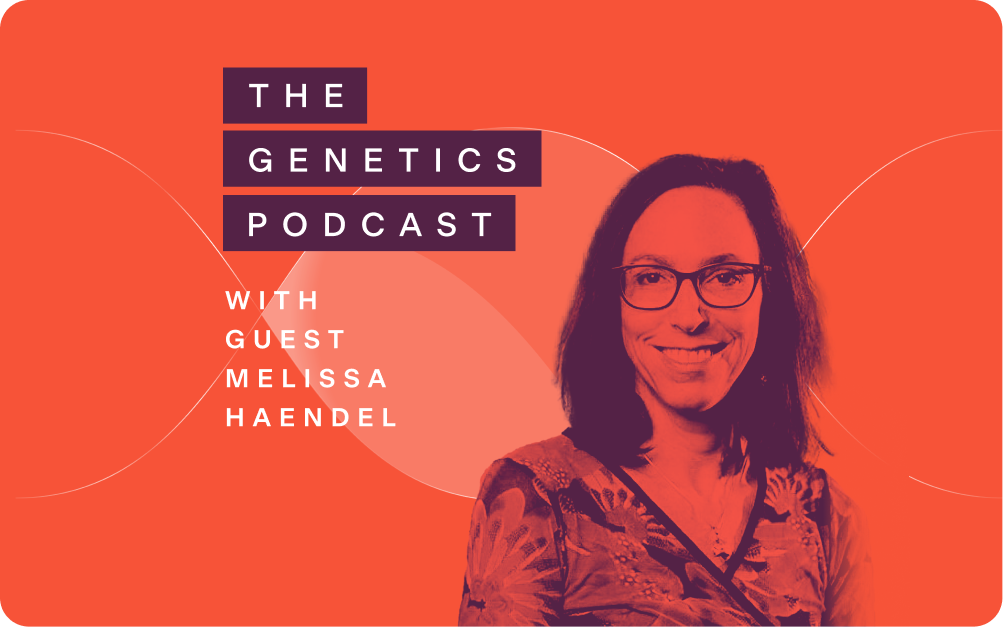
In a recent episode of The Genetics Podcast, Dr. Melissa Haendel, Director of Translational Informatics and Precision Health and Professor at the University of North Carolina at Chapel Hill and Phenotypic Lead at Alamya Health, joined the show to discuss how data integration, patient voice, and national-scale collaboration can transform diagnosis and care for rare diseases. As the co-founder of the Monarch Initiative and a driving force behind the Mondo disease ontology, Melissa is helping shape the future of equitable and precise genomic medicine.
From a Craigslist job ad to diagnostics pioneer
Melissa’s unconventional academic journey began with a Craigslist ad for an ontologist position that she came across while searching for a truck. That role launched her into biomedical data science and ultimately led to the development of cross-species phenotype algorithms that are still used today in rare disease diagnostics. This early work laid the foundation for her leadership in building computational tools which leverage ontologies to connect phenotypic and genomic data across species.
Why patient descriptors matter in rare disease
Melissa explains how ontologies such as the Human Phenotype Ontology (HPO) can uncover hidden diagnostic patterns by allowing comparison of non-exact symptom matches. However, a key gap remains: most clinical descriptions are stored as unstructured notes, making it hard to extract meaningful data. Worse, patients often describe symptoms differently than clinicians, and many of their concerns never make it into the record at all.
To bridge this gap, her team translated parts of the HPO into layperson-friendly language, enabling patients to self-report their symptoms in a structured format. Simulations show these patient-derived inputs can be surprisingly accurate and helpful in diagnosis. With large language models (LLMs) now in play, Melissa envisions dynamic, interactive tools that guide both patients and clinicians through shared diagnostic journeys.
Fixing data infrastructure from the ground up
Another major challenge she mentioned is that most rare diseases don’t have unique billing or diagnostic codes in health systems. This makes it nearly impossible to track patient populations or power research at scale. To solve this, Melissa and collaborators created Mondo: a logic-based ontology that reconciles disease definitions across databases and national systems.
Mondo is now being deployed into clinical practice through a new partnership with IMO Health, starting with Epic electronic health record (EHR) integrations this fall. It’s a foundational step toward ensuring that rare diseases are documented consistently, queried easily, and treated with the same rigor as more common conditions.
Enabling access with community-based genomics
Beyond academia, Melissa is also helping democratize genomic medicine through Alamya Health, a startup focused on setting up affordable, high-quality diagnostic labs in underserved areas. Instead of relying on multiple disconnected tests, Alamya Health uses a single whole genome sequencing approach with AI-powered interpretation to reduce both cost and complexity.
Alamya’s model isn’t just about technology; it’s about education. By training local healthcare professionals to interpret genomic data and run labs in rural hospitals and safety-net systems, they’re building lasting diagnostic capacity in places that have historically been left behind.
Real-world data as public utility
Melissa sees data as a public good and believes real-world data (RWD) should be treated like water or electricity in that it should be regulated, accessible, and interoperable. Her experience leading national-scale data collaborations like the National COVID Cohort Collaborative (N3C) has taught her that multi-stakeholder partnerships across government, academia, industry, and patients are essential to unlocking the full potential of health data.
Projects like CLAD (Center for Linkage and Acquisition of Data) are beginning to make this vision real by connecting patient records across fragmented systems using eHealth Exchange and other national health information networks. For the first time, researchers can pull complete EHR data for individuals from disparate systems under a unified research authorization model. This will provide better natural history data, cohort discovery, and trial recruitment.
From better disease definitions to equitable access to diagnostics, Melissa is working across sectors to close the gap between innovation and impact in rare disease medicine. She invites clinicians, researchers, and patient communities to help test and scale tools like Mondo and to join the movement toward a more integrated and inclusive genomic future.
Listen to the full episode below.