
Podcast recap: Dr. Helen O'Neill on genome editing, the CRISPR baby controversy, and transforming women’s reproductive health
 By Joy N. Ismail, PhD
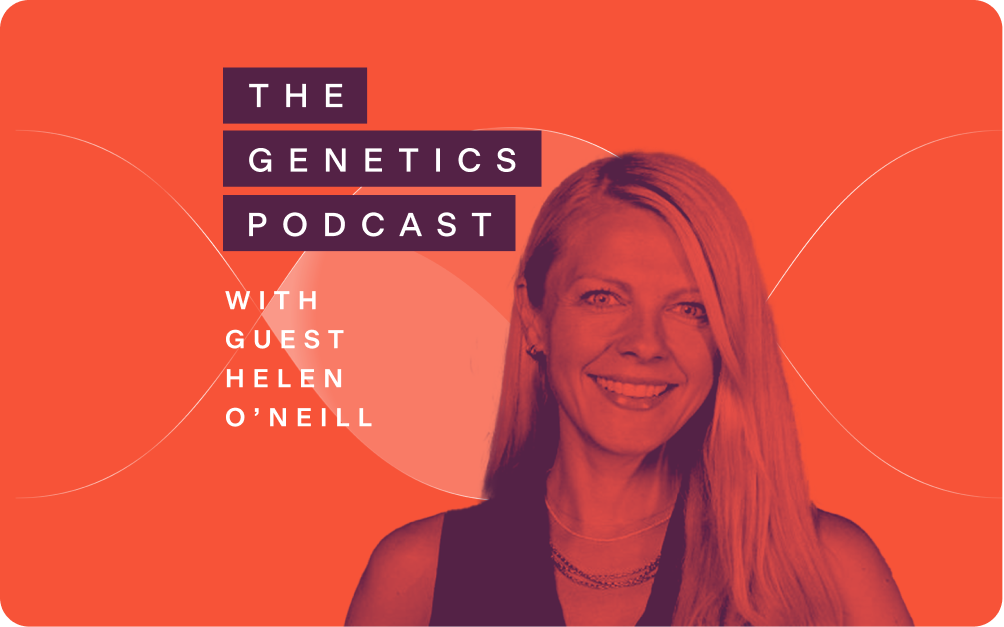
In the most recent episode of the Genetics Podcast, Patrick spoke with Helen O’Neill, a molecular geneticist who is the founder of Hertility Health and an associate professor at University College London (UCL). They discuss how Helen’s experience as an identical twin sparked her interest in genetics, her firsthand account of the CRISPR baby controversy, and why stubborn perceptions and sensational headlines continue to cast a shadow over the gene editing field, despite major scientific progress.
The journey from a curious twin to a reputable academic
Having an identical twin and coming from a medically-oriented family, Helen had an innate curiosity about the biological similarities and phenotypic differences between herself and her sister. This pushed her to pursue her education and training in fetal medicine and prenatal genetics.
For the past ten years, she has been a Lecturer in reproductive and molecular genetics at University College London, where she has also led a research group. She discusses exciting technological advancements that have occurred over the span of her career, particularly the co-evolution of genome sequencing and bioinformatics. There have also been extensive developments in chemical engineering that have reduced restrictions on delivery parameters and methods.
Attending the conference where news of the CRISPR babies was announced
While preparing to give a talk on how to safely conduct human germline genome editing at a conference in Hong Kong in 2018, Helen was shocked by the announcement that a scientist (He Jiankui) had edited human embryos and the babies had been born. She highlights how many parameters of genome editing were still not optimized or identified, such as the delivery mechanism and the optimal time window, emphasizing the attempt was premature and therefore unethical.
However, she goes on to discuss her nuanced and pointed perspective on the incident. While the technology may not have been ready to be used in embryos yet, she was not supportive of the intensity and severity of the criticism that followed. She also points towards the discrimination that was apparent in media headlines at the time that framed Jiankui as a "rogue Chinese scientist." Importantly, the sensationalism that surrounded the scandal has cast a dark and persistent shadow on the field of germline genome editing. Helen mentions the public’s stubborn negative perceptions of the field, although extensive progress and refinement have occurred. She notes that the outright rejection of genome editing by many is therefore largely unwarranted and is not based on up-to-date science.
Rethinking embryo editing: From discarding to correcting
Helen shares findings from her team’s study of over 48,000 embryos screened for monogenic conditions using Preimplantation Genetic Testing for Monogenic Disorders (PGT-M). While the common argument against germline genome editing is that genetic screening allows for selecting healthy embryos, the data showed that many patients still end up without a viable embryo, especially when screening for multiple mutations or performing HLA typing.
This leads Helen to propose a new use case: instead of discarding embryos with mutations, why not correct them? For couples undergoing multiple failed IVF cycles, genome editing could provide a chance to “rescue” embryos that might otherwise be lost. Helen also challenges the ethical framing around germline editing, particularly since the procedure itself isn't dramatically different from standard embryo testing. She argues this approach could be more ethically sound, particularly when seen through the eyes of patients. Drawing parallels to how mitochondrial therapy laws changed due to patient advocacy, Helen believes genome editing could also be driven by informed, motivated families rather than abstract debate.
Giving women control over their reproductive health with Hertility
Helen O’Neill co-founded Hertility to address a personal and systemic frustration: the lack of accessible, science-backed tools for women to understand their fertility without immediately entering the clinical IVF pipeline. What started as an idea during the COVID-19 lockdown quickly gained traction. Within weeks, 7,000 women had signed up, revealing a widespread demand for proactive reproductive health insights.
Today, Hertility has grown into a leading at-home health platform, with over 620,000 women completing its digital health assessment and hormone testing. The platform uses this data to diagnose up to 18 gynecological conditions with 98–99% accuracy within days. With plans to launch a biobank for longitudinal women’s health research, Helen’s mission is clear: to close the knowledge gap and bring personalized, evidence-based care to a space that has long underserved women.
Listen to the full episode here: