
Podcast recap: Frank Gentile on harnessing autophagy to treat neurodegenerative diseases
 By Joy N. Ismail, PhD
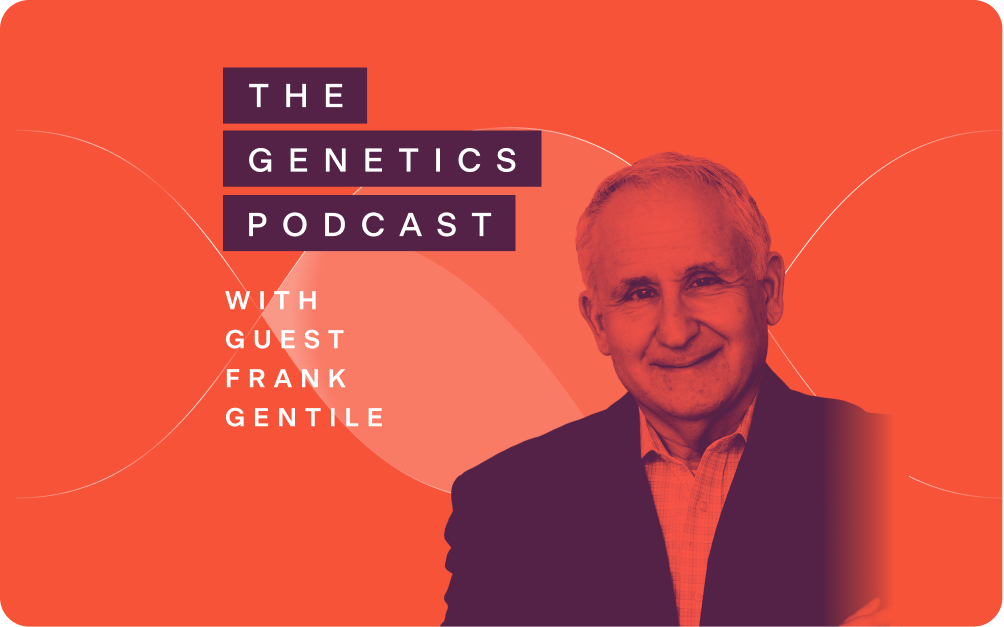
In a recent episode of The Genetics Podcast, we talked to Frank Gentile, Chief Executive Officer of Casma Therapeutics, to explore how autophagy could be a valuable target for treating neurodegenerative and lysosomal diseases. Coming from a venture capital background, Frank offered a fresh and strategic perspective on the science being done at Casma.
Understanding autophagy and its therapeutic potential
Autophagy is one of two major systems cells use to degrade unwanted materials. Unlike the proteasome, which handles small proteins and peptides, the autophagy system can digest much larger “cargo” like protein aggregates, dysfunctional organelles, and lipid droplets. Casma’s main focus was to explore how modulating autophagy could help eliminate these pathological components, especially in diseases where large aggregates and organelle dysfunction are implicated.
Frank explains how Casma focused on TRPML1, a lysosomal ion channel that plays a key role in lysosome acidification, which is a critical step for proper autophagy. Activating this target enables cells to better degrade and recycle damaged components. This mechanism is especially relevant in conditions like Parkinson’s disease, Alzheimer’s disease, amyotrophic lateral sclerosis (ALS), and various lysosomal storage disorders, where the clearance of aggregated proteins or dysfunctional mitochondria is impaired.
A pathway for Parkinson’s and rare diseases
Casma’s lead program targets TRPML1 and is being developed for patients with Gaucher disease who also suffer from Parkinson’s disease (GDPD). These individuals, often excluded from clinical trials, represent a clearly defined population with a severe unmet need. Interestingly, these patients can exhibit Parkinsonian symptoms only when a second “hit” occurs (often a mutation in another lysosomal gene) which underscores the central role of lysosome function in disease progression.
Frank also discusses why TRPML1 agonism could benefit both genetically-defined Parkinson’s subgroups (e.g., GBA1, LRRK2) and the broader population with sporadic disease. Preclinical studies in multiple animal models show that Casma’s drug candidate can reduce inflammation, clear aggregates, and restore lysosomal function.
From bench to bedside: what the clinical program looks like
Casma is planning a Phase 1B/2A trial involving healthy volunteers and GDPD patients. The trial design includes single and multiple ascending dose cohorts, with particular attention to biomarker-driven endpoints such as lipid and bone metabolism markers. These signals, Frank notes, may appear within just three months of treatment, a significant advantage in terms of clinical development speed.
What makes the GDPD population especially attractive is the well-characterized natural history of the disease. These patients are already followed closely at academic centers and the NIH, making recruitment and longitudinal analysis more feasible than in many other rare diseases.
A pipeline beyond TRPML1
While Casma’s lead program is entering clinical trials, its pipeline includes a second platform built around heterobifunctional molecules that initiate autophagy. These function similarly to proteasomal-targeted degraders by bringing autophagy initiation machinery directly to pathogenic targets like tau or damaged mitochondria. One of Casma’s most exciting discoveries is a set of small molecules that upregulate autophagy without touching mTOR, a pathway involved in many essential cellular processes and therefore a risky target for chronic modulation.
This mTOR-independent activation of autophagy could open doors to broader therapeutic applications, from neurodegenerative diseases to metabolic disorders and even longevity-focused interventions.
Biotech in 2025: a strategic lens on science and risk
Frank also shares his perspective on biotech innovation and investment in today’s environment. Having come from a venture capital background, he views Casma’s TRPML1 program as a portfolio in itself, with potential applications across rare and common diseases. He emphasizes the importance of scientific rigor, particularly the need for multiple validated disease models and mechanistic clarity, as a way to manage risk and sustain investor confidence.
What’s next for Casma
As Casma prepares for its clinical studies, it is also laying the groundwork for a new class of autophagy-based therapeutics. Whether through targeted lysosomal repair or selective degradation of disease-driving cellular components, the company is creating a versatile platform with wide-ranging potential.
Listen to the full episode below.