
Podcast recap: David Bumcrot on the untapped power of regulatory RNAs
 By Joy N. Ismail, PhD
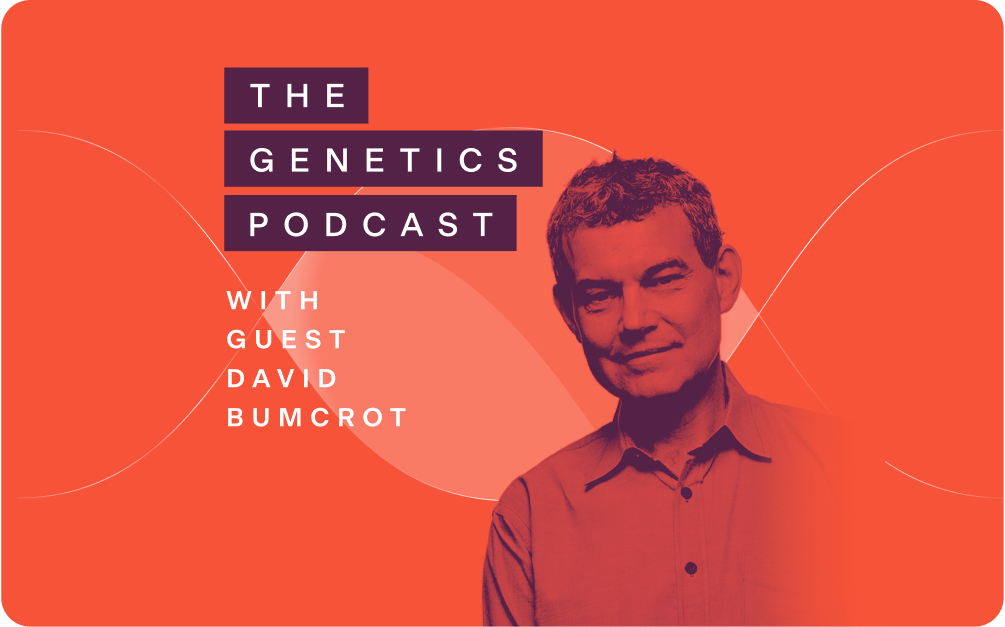
In the latest episode of The Genetics Podcast, we had a captivating conversation with Dr. David Bumcrot, Chief Scientific Officer at CAMP4 Therapeutics. From helping launch foundational biotech companies like Alnylam and Editas to now pioneering a novel therapeutic approach at CAMP4, David offers rare insights into what it takes to bring revolutionary science to life and to patients.
From RNAi and CRISPR to the next frontier
David began his career at the forefront of two transformative biotech innovations: RNA interference (RNAi) at Alnylam and CRISPR gene editing at Editas. He recounts how both technologies, originally discovered in non-human organisms, were harnessed into viable therapeutic platforms over years of trial and error. One key lesson he mentions is that success in platform science requires launching drug programs even before the technology is perfect, because real-world use reveals the most critical insights.
Enter regulatory RNAs: A new modality for upregulation
Now at CAMP4, David is championing a third wave: targeting regulatory RNAs, a class of non-coding RNAs transcribed from promoters and enhancers that fine-tune gene expression. These RNAs were long dismissed as biological noise, but groundbreaking work, particularly by CAMP4 co-founder Rick Young, revealed their role as molecular scaffolds that regulate transcriptional condensates.
CAMP4’s approach uses antisense oligonucleotides (ASOs) to modulate these regulatory RNAs and selectively increase gene expression, which has been difficult with other RNA-based therapies. This strategy holds particular promise for haploinsufficient diseases, where boosting gene expression from a single functional copy could reverse or mitigate disease phenotypes.
From concept to clinic
David details how CAMP4 is applying this approach to central nervous system (CNS) disorders, especially developmental conditions like SYNGAP1-related intellectual disability. He discusses the company’s stepwise strategy: begin with tissues where ASO delivery is clinically validated (like liver and CNS), then expand. Notably, their urea cycle disorder program is already in a Phase 1 trial in healthy volunteers, with plans for SYNGAP1 to enter clinical trials soon.
The biggest challenge has been understanding the expression thresholds needed for therapeutic effect. However, decades of human genetics research, mouse models, and new mapping tools (developed in-house) have helped narrow those parameters.
Building a better regulatory map
Many regulatory RNAs are poorly annotated. CAMP4 tackles this with custom transcriptional mapping across multiple cell types, including iPSC-derived neurons and primary hepatocytes. Their internal datasets offer detailed blueprints of enhancer-promoter activity, enabling them to pinpoint exactly which regulatory RNAs to target for each gene and how.
Beyond rare disease: Scaling the platform
While early programs target monogenic disorders, CAMP4 is also exploring common diseases like Parkinson’s disease via upregulation of implicated genes such as GBA1. But large-scale trials bring new complexities and CAMP4 may look to partner on these programs to expand reach and resources.
A regulatory framework for the future
One of David’s biggest hopes is for regulators to evolve alongside the science. He sees promising signs of agencies becoming more receptive to in vitro models and nuanced safety profiles for well-characterized modalities like ASOs. Drawing inspiration from bespoke therapies, he argues for a regulatory framework that balances urgency with safety especially for life-threatening genetic conditions.
As a final note, David emphasizes the importance of continued support for basic science, which often leads to major breakthroughs. He also notes that while the biotech sector is facing financial challenges, the underlying science remains strong and full of potential.
Listen to the full episode below.