
Podcast recap: Ananth Sridhar and Sun-Gou Ji on building a sustainable model for rare disease innovation
 By Joy N. Ismail, PhD
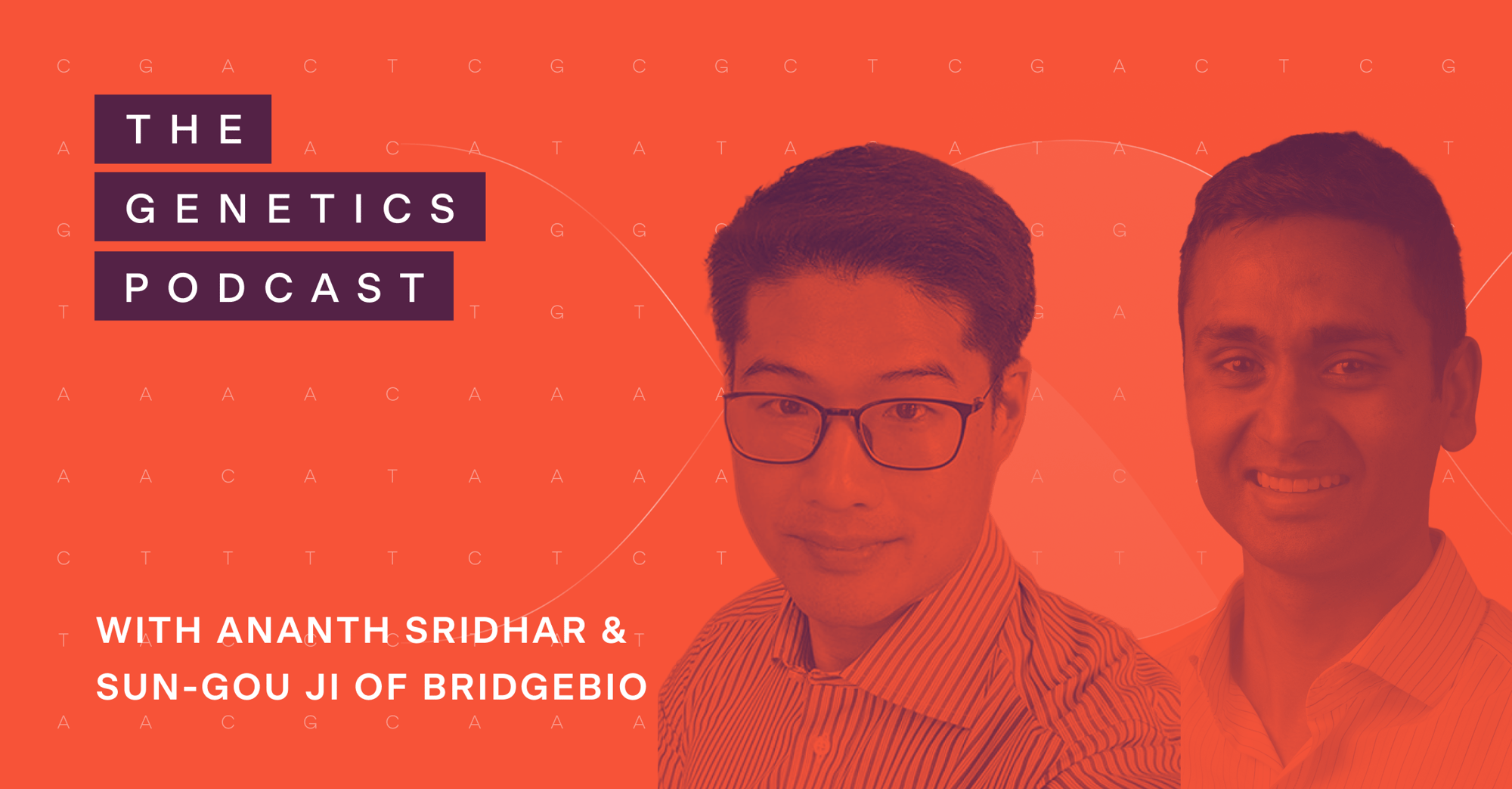
On the latest episode of The Genetics Podcast, we spoke with Ananth Sridhar, Chief Operating Officer for cardiorenal programs at BridgeBio, and Sun-Gou Ji, the company’s Vice President of Computational Genomics. The conversation explored how BridgeBio’s distinctive hub-and-spoke model enables sustainable rare disease drug development, how genetics drives their discovery work, and why the right economic model is essential for tackling small patient populations.
A new way to organize drug development
BridgeBio’s hub-and-spoke model separates individual drug programs from shared company functions. Each spoke is a small team that focuses on one molecule or indication, building deep expertise in the biology, patient community, and clinical design. The hub provides centralized support such as finance, HR, legal, and computational genomics.
Ananth explained that this setup improves efficiency and reduces risk. If one program fails, it does not affect the others. The structure allows BridgeBio to manage several programs at once and invest in rare diseases that might otherwise be too small or uncertain for traditional funding models.
Measuring success differently
BridgeBio also evaluates programs using risk-adjusted net present value (NPV) instead of peak sales forecasts. This approach factors in scientific probability, cost, and time to market.
Sun-Gou noted that this method helps smaller programs compete with those in common diseases, since well-understood genetics and focused trials can shorten timelines and lower costs. BridgeBio recently published a simple model showing how these factors influence whether a program can be developed sustainably.
From genetics to treatment in ADH1
Ananth and Sun-Gou described BridgeBio’s work on autosomal dominant hypocalcemia type 1 (ADH1), a rare disorder caused by gain-of-function variants in the calcium-sensing receptor (CASR) gene. The condition leads to low blood calcium and excessive calcium in the urine.
Current treatments such as calcium and active vitamin D can raise blood calcium but often worsen kidney function. BridgeBio’s candidate drug, a CaSR antagonist, aims to restore balance by reducing receptor activity. The program began after encouraging early results from NIH researchers and has progressed to a phase 3 trial, the first industry-sponsored study in this disease.
Finding patients has been a challenge. Sun-Gou’s team found that around four in 100,000 people carry disease-causing CASR variants, but few have been diagnosed. Many show signs in their lab results but have not had genetic testing. This gap between genetic prevalence and clinical recognition is common across rare diseases.
Choosing the right technology
Ananth and Sun-Gou both emphasized that BridgeBio does not favor any single therapeutic approach. The company uses small molecules, RNA, or gene therapy depending on what best fits the biology. Advances in modeling and screening have made small molecule discovery faster and more precise, but the guiding principle remains to use the right tool for each problem.
Making genetics practical
For Sun-Gou, the key to discovery is access to high-quality data. His team combines open resources such as UK Biobank and All of Us with rare-disease–focused data from national programs and genetic testing companies. The main challenge is not a lack of data but that each dataset operates in its own secure environment. Much of his team’s work involves linking these systems to identify and validate new targets.
Why newborn sequencing matters
Sun-Gou shared that his infant daughter was recently diagnosed with a rare genetic condition. Even with excellent medical care, the experience showed how earlier genetic information could have led to faster diagnosis and treatment. He believes newborn sequencing should become standard both to help families and to improve future research.
Ananth added that genetics could also make medicine more predictive. Instead of only identifying risk, it could help determine the likelihood of disease progression and which treatment is most effective for each person.
Takeaway
BridgeBio’s model combines focus, data, and portfolio management to make rare disease drug development more efficient and financially viable. As Ananth said, the goal is not to be another company chasing the same targets, but to make progress where it has not been made before.
Listen to the full episode below.