
- 37% of trial sites struggle with under-enrollment, and 11% fail to enroll a single patient
- 90% of trials need their timelines doubled to meet enrollment goals
- The average cost to recruit a single patient is $6,533, and replacing a patient who drops out can reach $19,533
These numbers reflect a deeper issue. Recruitment failures are rarely caused by a single broken step. They result from disconnected workflows, limited patient awareness, and strategies that do not account for how patients actually find and evaluate clinical trials.
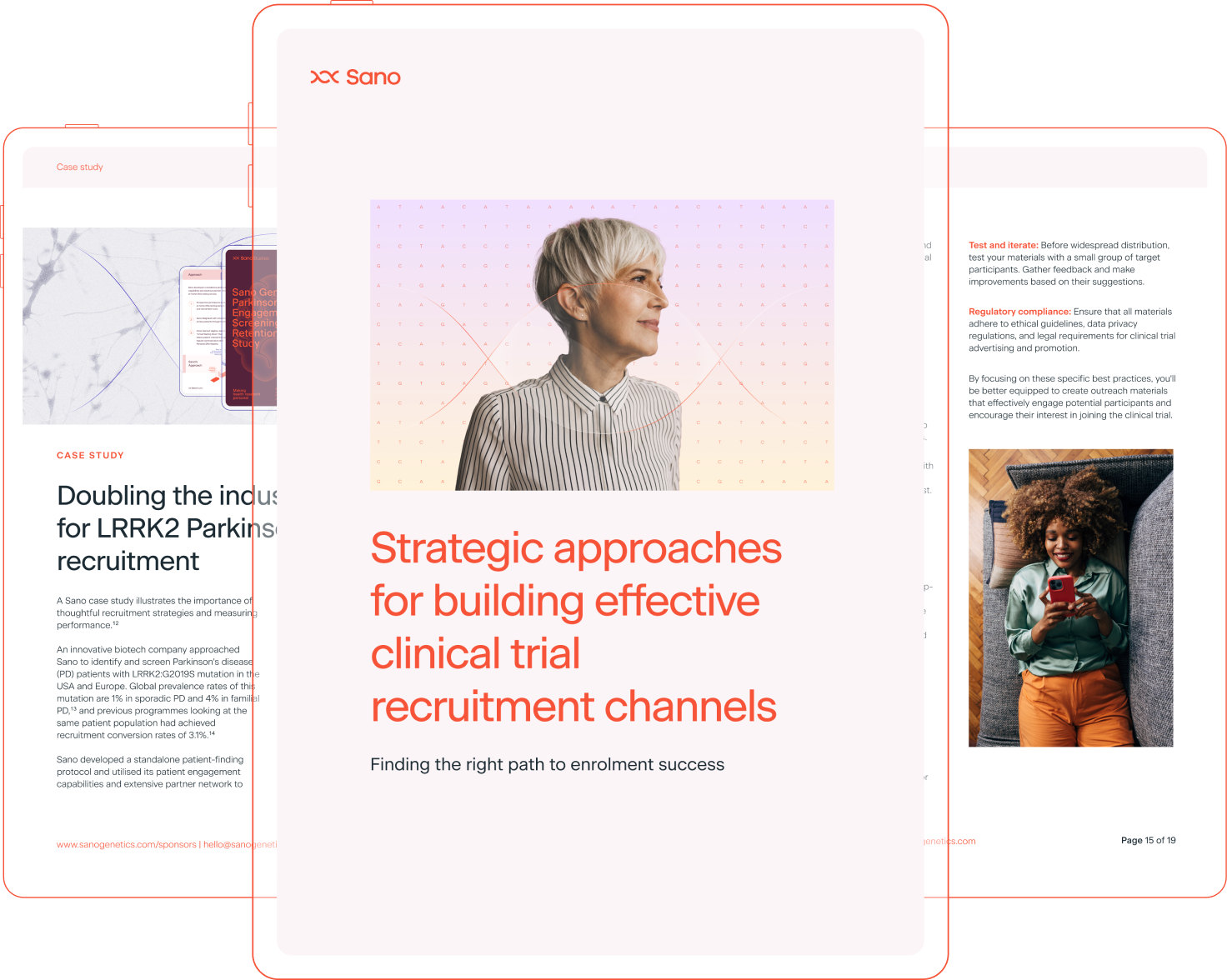
Our whitepaper, Strategic approaches for effective clinical trial recruitment channels, examines these dynamics in detail. It breaks down the operational and strategic factors that determine whether a recruitment approach scales or stalls, and provides a structured framework for selecting, sequencing, and evaluating recruitment channels across different study designs.
Key Takeaways
- Clinical trial recruitment is a significant challenge, with 37% of sites struggling with under-enrollment and 11% failing to enroll any patients.
- 90% of clinical trials require their timelines to be doubled to meet enrollment goals.
- The financial burden of recruitment is high, averaging $6,533 per patient and nearly $20,000 for replacements.
- Strategic recruitment approaches are essential for improving efficiency, inclusivity, and staying competitive in the industry.
Why recruitment strategy matters more than recruitment volume
Most recruitment programs focus on increasing the number of patients entering the funnel. Fewer focus on whether the right patients are entering through the right channels, or whether those patients can be effectively moved through screening and enrollment.
This distinction matters. Research shows that 72% of trial participants are already patients at the enrolling site, which means external recruitment channels are competing for a much smaller share of patients. Meanwhile, 70% of patients have never considered clinical trials as an option when discussing treatment with their doctor, pointing to a fundamental gap in awareness that no single advertising channel can close on its own.
Effective recruitment strategy requires understanding where patients come from, what motivates participation, and where drop-off occurs. The whitepaper examines these dynamics across channel types, including digital advertising, physician referral networks, patient communities, registries, and advocacy partnerships, and outlines how to evaluate channel performance based on quality of referral rather than volume alone.
What the whitepaper covers
The whitepaper addresses several interconnected questions that shape recruitment outcomes:
- Channel selection: How to identify which recruitment channels are appropriate for a given study design, therapeutic area, and patient population
- Patient awareness: Why low public awareness of clinical trials creates structural recruitment constraints, and what sponsors can do to address it
- Referral quality: How to measure whether a channel is producing patients who are likely to screen, qualify, and enroll, not just patients who express interest
- Retention implications: Why recruitment strategy and retention strategy are not separate problems, and how early engagement quality affects downstream drop-out
- Coordination across channels: How to manage multi-channel programs without creating duplication, inconsistent messaging, or untrackable referral flows
The added complexity of precision medicine recruitment
These challenges are amplified in precision medicine trials, where eligibility depends not only on clinical criteria but also on genetic or biomarker status. In these studies, recruitment is a multi-step process: patients must first be identified, then agree to testing, and only a subset will meet the genetic criteria required for enrollment.
As trial complexity increases and the average number of targeted endpoints grows, the gap between traditional recruitment approaches and what precision trials require becomes more pronounced. Sponsors need recruitment strategies that account for testing logistics, patient education around genetics, and the longer qualification pathways that characterize biomarker-driven studies.
The whitepaper provides a foundation for thinking through challenges across both traditional enrollment program and genetically stratified studies that require coordinated recruitment, testing, and engagement workflows.