
Key Takeaways
- Genomic data volumes continue to grow, necessitating new management strategies.
- Key challenges include the sheer volume of data, high computational requirements, and sensitive privacy concerns.
- Innovation in storage and analysis tools is critical for transforming raw data into actionable medical insights.
- Collaboration and robust security measures are essential to navigate the complexities of large-scale genomics.
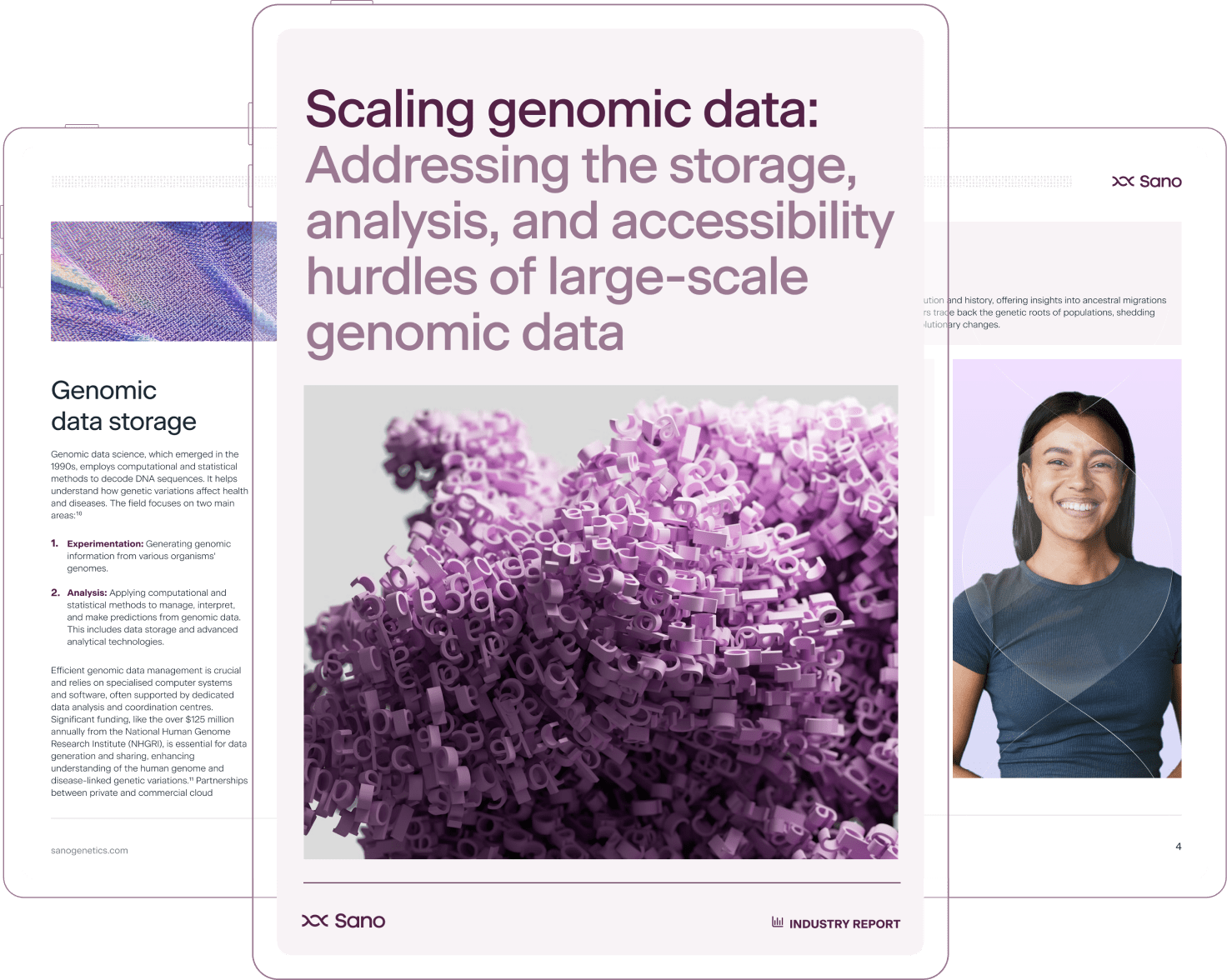
Our report, "Scaling genomic data: Addressing the storage, analysis, and accessibility hurdles of large-scale genomic data," examines these challenges in detail and explores how they affect clinical research teams working at the intersection of genomics and drug development.
The growth of genomic data and its operational implications
The volume of genomic data generated globally has grown sharply over the last two decades, driven by continued advances in sequencing technologies. This data is essential for understanding disease mechanisms and developing targeted therapies. However, the pace of data generation has outstripped the infrastructure available to store, analyze, and make it accessible. For sponsors and research teams working in precision medicine, these constraints are not theoretical. They directly affect how quickly insights can be translated into clinical decisions.
The report explores the primary hurdles facing genomic data management. These fall into several interconnected categories:
- Data volume: The scale of genomic datasets requires significant computational power and sophisticated storage solutions that many organizations are still building toward.
- Analysis complexity: Working with genomic data requires computational methods and tools capable of integrating multiple data types into comprehensive models. This is particularly challenging when combining genomic information with clinical, phenotypic, or real-world data.
- Privacy and security: The sensitive nature of genomic information raises substantial privacy concerns, requiring robust and auditable security measures to protect individual data across jurisdictions.
- Accessibility: Making genomic data usable across research teams, institutions, and study phases remains a persistent barrier to translating raw data into clinical insight.
Despite these challenges, the report highlights innovations that are reshaping how genomic data is managed and applied. Continued progress will depend on collaboration across data science, clinical operations, and regulatory frameworks.
Why this matters for precision medicine trials
For biotech and pharmaceutical teams designing genetically stratified studies, genomic data challenges are not abstract infrastructure problems. They have direct consequences for how trials are planned and executed.
When genomic data is difficult to access, integrate, or share across research phases, several operational risks increase:
- Patient identification and pre-screening become slower and less precise.
- Genetic eligibility data collected in one study cannot easily inform future programs.
- Coordination between sponsors, labs, and sites becomes more fragmented.
Addressing these challenges requires more than better storage. It requires systems that connect genomic data collection, sharing, and analysis within a framework that supports compliance, recontact, and longitudinal engagement.
This is the problem Sano's platform is designed to solve: unifying patient recruitment, genetic testing, and long-term engagement into a single, compliant system so that genomic data generated in one program becomes a durable asset for the next.
To learn more, download the report.