
Key Takeaways
- Genomic screening technologies like NIPT and gene panel testing are enabling personalized medicine from birth.
- The integration of genetic data into early healthcare offers significant clinical insights but requires careful ethical navigation.
- Primary ethical challenges include maintaining data privacy, ensuring informed consent, and addressing issues of equity and access.
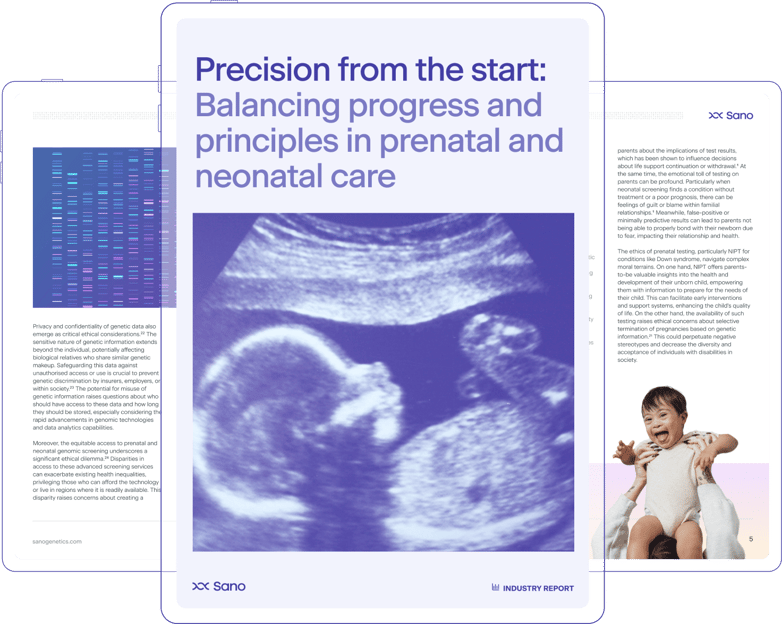
- The "Precision from the start" report provides a comprehensive look at balancing technological progress with core healthcare principles.
Since decoding the first human genome, innovations like gene panel testing and non-invasive prenatal testing (NIPT) have brought precision medicine closer to the earliest stages of life. NIPT, for example, uses a simple blood draw from the pregnant person to analyze cell-free fetal DNA, screening for chromosomal conditions such as Down syndrome (trisomy 21), trisomy 18, trisomy 13, and certain microdeletions as early as nine weeks of gestation. It is important to note that these are screening tests, meaning they assess the likelihood of a condition rather than providing a definitive diagnosis. High-risk results require confirmation through diagnostic procedures such as amniocentesis or chorionic villus sampling.
These capabilities enhance our understanding of genetic conditions earlier than ever before, but they also raise significant ethical questions around privacy, informed consent, access, and equity. The report examines the importance of integrating genetic data into prenatal and neonatal care while navigating these considerations with rigor and sensitivity.
The expansion of prenatal and neonatal genomic screening reflects a broader shift in how genetic data is used across the healthcare lifecycle. As screening becomes more accessible, the infrastructure required to manage, interpret, and act on genetic information at scale becomes a defining challenge, not only in clinical care but also in research and trial design. Programs that generate early genetic insights create opportunities for longitudinal engagement, recontact, and more precise patient identification across future studies.
This report explores the current state of prenatal and neonatal genomic screening, the ethical and operational questions it raises, and its potential to reshape how genetic data informs care from the earliest moments of life. For an in-depth exploration of these issues and more, download the report here.