
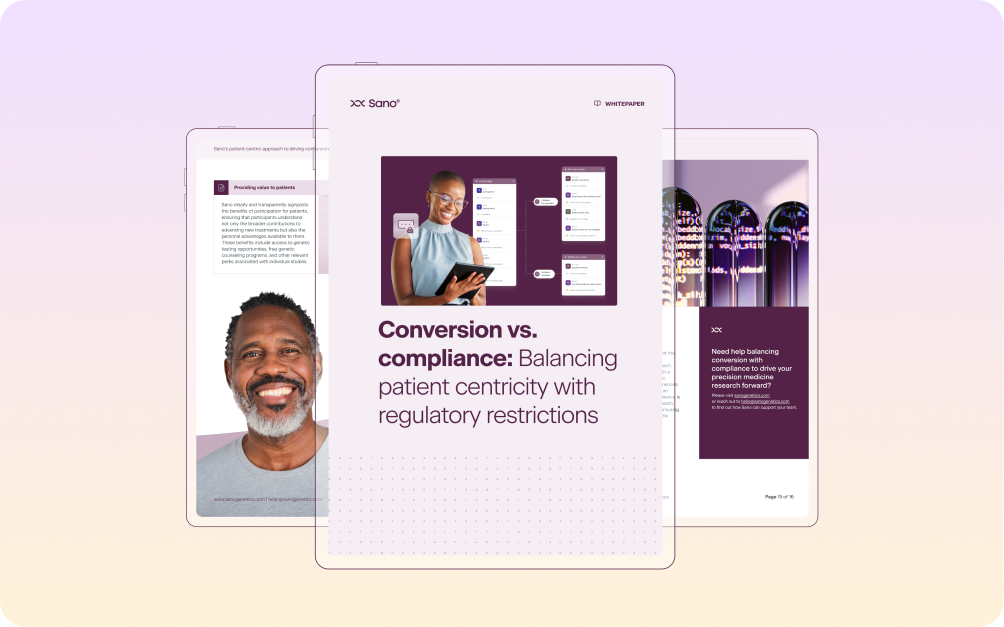

- Strategic Balance: Successful rare disease trials require balancing high conversion rates with strict regulatory compliance.
- Patient Safety: Compliance is a vital safety mechanism that ensures participants fully understand their role in research.
- Quality Outcomes: Patient-centric recruitment strategies lead to higher quality data and improved study success rates.
- Expert Collaboration: Sano’s framework utilizes partnerships with subject matter experts to streamline patient identification.
Compliance is not a constraint to work around. It is the mechanism through which patients develop the understanding and trust required to participate. Research consistently shows that patients weigh the purpose of a study, the potential risks and benefits, and the protection of their confidentiality when deciding whether to enroll. Recruitment campaigns that clearly address these concerns, within the boundaries set by regulators, are more likely to convert because they are answering the questions patients are already asking. When compliance is treated as a design principle rather than a legal checkpoint, the result is not just a safer experience but a more effective one: higher-quality data, stronger retention, and more successful studies.
What the whitepaper covers
When recruitment campaigns are too cautious, they fail to engage enough patients to meet enrollment targets. When they push too aggressively, they risk regulatory non-compliance and erode participant trust. Most teams experience this as a recurring operational problem: sites under-enroll, timelines extend, and the root cause is often traced back to how recruitment materials and workflows were designed in the first place. Our latest whitepaper presents a practical framework for navigating this tension. It outlines best practices for both conversion and compliance, and examines how patient-centric design principles can bring these two objectives into alignment rather than leaving them in conflict.
How Sano approaches the conversion-compliance balance
The paper details how Sano approaches the relationship between compliance and conversion across the recruitment lifecycle. This includes how recruitment materials are developed in collaboration with regulatory, clinical, and patient stakeholders; how pre-screening and engagement workflows are designed to maintain compliance without creating unnecessary friction; and how campaign performance is monitored to identify where drop-off occurs and why. The goal is not to choose between safe patient experiences and effective recruitment. It is to design systems where both are achieved through the same set of decisions.
To learn more about how Sano designs recruitment programs that maintain regulatory compliance while improving conversion across the patient journey, download the whitepaper or get in touch.